🐝 Wasps & Hornets
Yellow jackets, hornets, and paper wasps are a serious concern in Northeast Wisconsin — especially for those with sting allergies. They become aggressive in late summer and fall when colonies peak and food becomes scarce. Professional removal is the only safe approach, particularly for nests near living spaces.
Wasps & Hornets
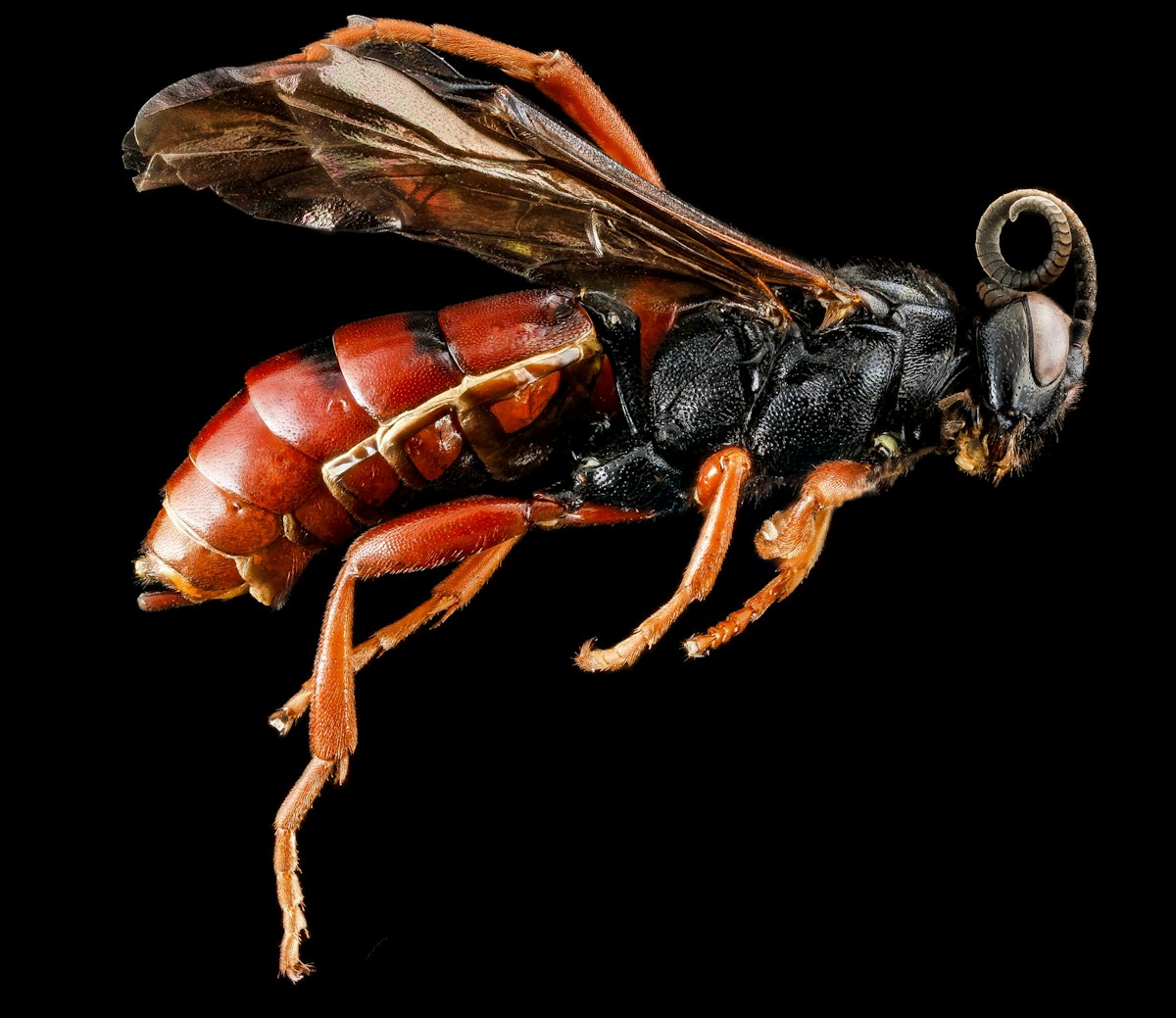
Yellow and black or reddish-brown, 1/2"–1" long. Smooth, hairless bodies (unlike fuzzy bees). Very narrow waist. Yellow jackets are the most aggressive; paper wasps are less aggressive but still sting when threatened.
What to Look For
Paper-like nests under eaves, in bushes, underground, or inside wall voids. Aggressive buzzing and swarming near entry points. Visible flight paths — wasps flying in a straight line to and from a specific location. Increased wasp activity at outdoor food and garbage areas in late summer.
When to Watch Out
Wasp activity begins in spring when queens emerge from overwintering and start building nests. Colonies grow throughout summer, reaching peak size (200–5,000 wasps) in August–September. They become most aggressive in late summer/fall as food sources dwindle. Frost kills off colonies except for fertilized queens, which overwinter to start new colonies the following spring.
How to Prevent Wasps & Hornets
Professional Treatment Process
Nest Location & Assessment
We locate all nests on your property — in eaves, soffits, wall voids, underground, and in vegetation. We identify the species (yellow jacket, hornet, or paper wasp) to determine the right treatment approach.
Safe Nest Elimination
We treat and remove nests using professional equipment and protective gear. Treatments are typically performed at dawn or dusk when wasps are in the nest and less active.
Structural Treatment
A residual product is applied around treated areas to discourage new colonies from establishing in the same location. This provides ongoing protection through the season.
Seasonal Prevention
Early-season treatments in spring prevent nests from forming in high-risk areas. We identify and treat the areas around your home where wasps are most likely to build.
Wasps & Hornets FAQ
Deal with Wasps & Hornets Now
Call us today for a free inspection. We'll identify the extent of the problem and recommend the right treatment — with no obligation to proceed.