🐭 House Mice
House mice are the most common rodent problem in Northeast Wisconsin homes and businesses. A single pair can produce up to 60 offspring per year. They contaminate food, chew through wiring (a leading cause of house fires), and spread diseases including salmonella and hantavirus. Fast, thorough action is essential.
House Mice
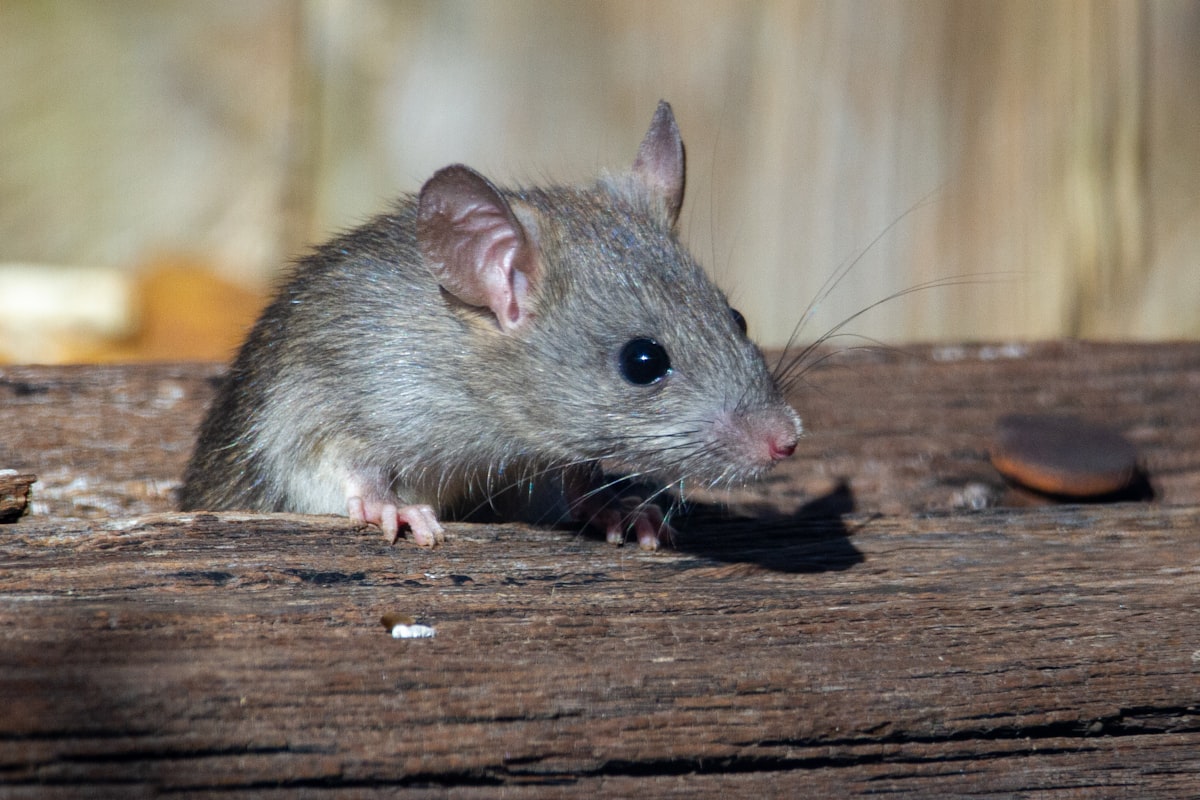
Gray-brown fur, 2.5–3.5" body with a tail of equal length. Small eyes and ears. Pointed snout. Droppings are 1/4" rod-shaped with pointed ends. Mice can squeeze through gaps as small as a dime.
What to Look For
Droppings in kitchen drawers, cabinets, and along baseboards. Gnaw marks on wood, wires, and food packaging. Greasy rub marks along walls where mice travel. Scratching or scurrying sounds in walls and ceilings at night. A musky odor in enclosed spaces.
When to Watch Out
Mice are year-round pests but become a major indoor problem in fall (October–November) when they seek warmth and food. Indoor populations remain active throughout winter. Spring brings outdoor population growth as breeding accelerates.
How to Prevent House Mice
Professional Treatment Process
Full Property Inspection
We locate all active entry points, travel paths, nesting sites, and the extent of the infestation. Every gap, crack, and penetration is documented.
Entry Point Sealing
We seal gaps with rodent-proof materials — steel wool, hardware cloth, and professional-grade sealants. Physical exclusion is the most effective long-term solution.
Tamper-Resistant Bait Stations
Locked, child- and pet-safe bait stations are placed in key activity zones inside and outside the structure to eliminate the existing population.
Ongoing Monitoring
Regular service visits check stations, track activity, and adjust strategy as needed. Our between-visit guarantee means if mice return, we come back at no charge.
House Mice FAQ
Deal with House Mice Now
Call us today for a free inspection. We'll identify the extent of the problem and recommend the right treatment — with no obligation to proceed.