Spiders
in Wisconsin
Spiders get a bad reputation, but outdoors they are one of the most beneficial animals in your yard. As predators of insects, they keep fly, mosquito, and garden-pest populations in check — free, silent, and chemical-free. The goal isn't to eliminate spiders; it's to keep them where they belong.
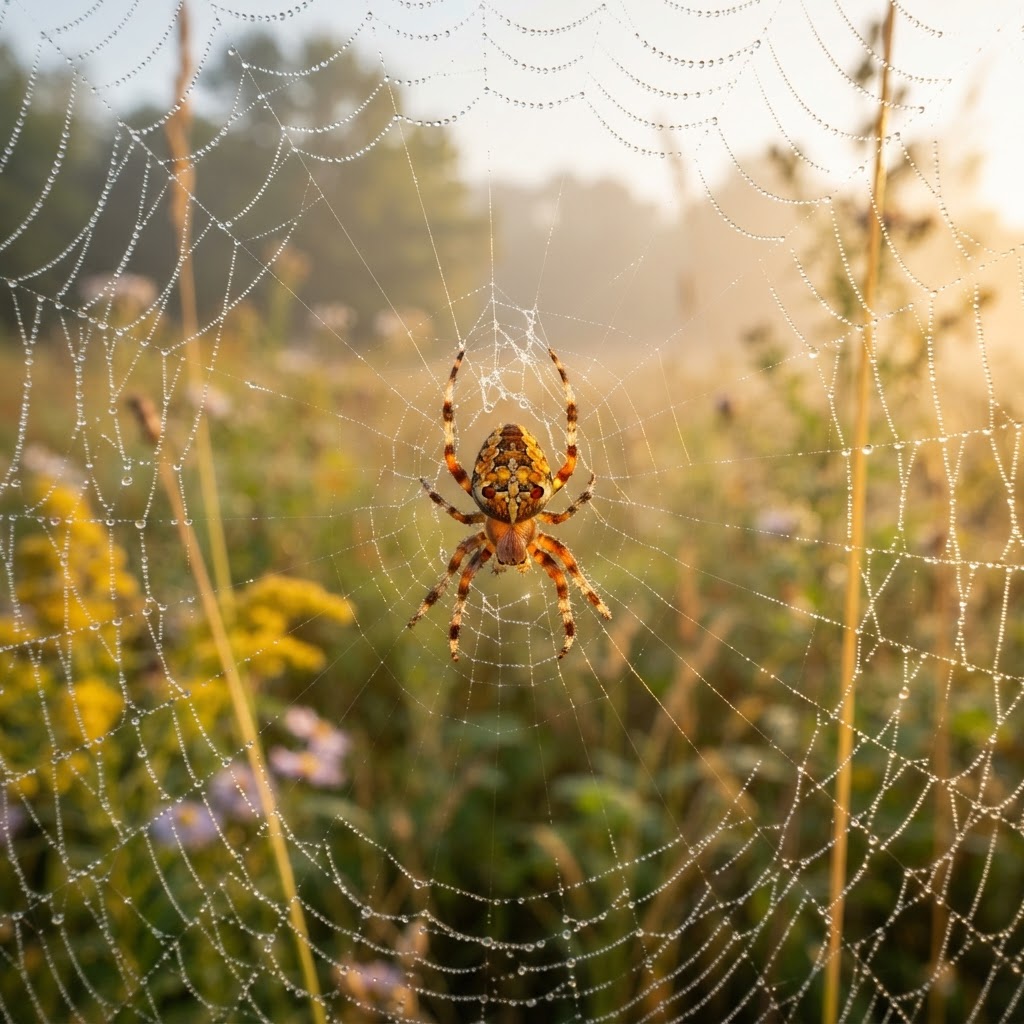
The old farmhouses and lake cabins scattered across Waupaca and Shawano counties are prime spider territory — webs in woodpiles, basements, and around outdoor lights are a near-constant in late summer. Outdoors, those same spiders are doing free yard-pest control across Northeast Wisconsin; Mid State only steps in when they move indoors in numbers.
In Northeast Wisconsin
Walk the old field edges and meadows at Gordon Bubolz Nature Preserve, check the trail margins at Hartman Creek State Park, or inspect any Waupaca County cabin woodpile in late summer.
Spiders eat flies, mosquitoes, aphids, and other insects that damage gardens and bother people.
A healthy spider population reduces the need for chemical insecticides around your home.
Spiders are an essential food source for birds, especially during nesting season.
The vast majority of Wisconsin spiders cannot harm humans and prefer to avoid us.
Why Spiders Matter
Spiders are among the most abundant and important predators in terrestrial ecosystems. Worldwide, they consume an estimated 400–800 million tons of insects per year — more than every human on Earth eats. In your garden, a single spider can patrol a plant and remove dozens of pest insects in a day. Their presence is a sign of a healthy, balanced yard.
Common Spiders in Wisconsin
Here are the common Spiders found across Wisconsin, with the specific benefits each species provides to nature and to people.
Common House Spider
Benefits to NatureBuilds tangled webs in corners and eaves, capturing flies, mosquitoes, and other flying insects that enter Wisconsin homes and outbuildings. One of the most familiar spiders statewide.
Benefits to HumansFree, silent indoor and outdoor fly control — no chemicals required. A few house spiders in the basement are doing useful work.
Cellar Spider
Benefits to NatureThrives in damp Wisconsin basements and crawl spaces, preying on other spiders and small insects in dark, undisturbed areas. Its long, delicate legs are unmistakable.
Benefits to HumansHarmless to people and actually helps keep other spider and insect numbers down. It will even eat more dangerous spiders.
Wolf Spider
Benefits to NatureA fast, ground-hunting predator that does not build webs, instead chasing down pests on the soil and in Wisconsin gardens. Often seen carrying egg sacs or young on its back.
Benefits to HumansPatrols gardens and fields eating caterpillars, beetles, and other crop and lawn pests. Large and fast, but harmless to people.
Orb Weaver
Benefits to NatureSpins the classic round webs between plants and structures across Wisconsin, catching dozens of flying insects each night. Most active in late summer and fall.
Benefits to HumansOne of the best natural mosquito and fly controllers in the summer garden. Their webs are a sign of a healthy, insect-balanced yard.
Jumping Spider
Benefits to NatureAn active, curious daytime hunter that pounces on plant pests like aphids, flies, and caterpillars on Wisconsin plants. Excellent vision and a hairy body make it easy to recognize.
Benefits to HumansCharismatic and harmless; a gardener's ally that keeps plant-damaging insects in check. Often described as the 'cutest' spider in Wisconsin.
Related Beneficial Species
These species do similar work in the Wisconsin landscape — explore how they fit together.
When They're Beneficial
- Outdoors in gardens, around plants, and near exterior lights eating insects
- In sheds, barns, and garages where they control flies and other pests
- Supporting bird populations as an essential food source
- Reducing the need for chemical pesticides in your yard
When Spiders Move Indoors
Outdoors, spiders are allies. Indoors, large numbers of webs, egg sacs, and spiders can become a nuisance — and a few species warrant caution. If spiders have overrun your home, professional perimeter treatment and web removal can bring them back to a comfortable level without wiping out the beneficial outdoor population.
Spider ControlLiving Alongside Spiders
Leave Outdoor Spiders Alone
Spiders on your porch, in your garden, and around exterior lights are doing free pest control — let them work.
Reduce Exterior Lighting
Bright outdoor lights attract the insects spiders feed on, which in turn attracts spiders. Use warm, low-intensity lighting.
Relocate, Don't Crush
A spider indoors can be moved outside with a cup and paper. Most want to leave as much as you want them to.
Seal Entry Points
Caulk gaps and weather-strip doors to keep spiders from moving indoors in fall.
When to Call a Pest Professional
Outdoor spiders are allies, but when spiders overrun your living space, professional perimeter treatment and web removal can push them back outside — without wiping out the beneficial outdoor population.
- Large numbers of webs, egg sacs, and spiders throughout your home's interior
- Repeated indoor sightings despite cleaning and sealing entry points
- Spiders appearing in multiple rooms over several weeks
- You suspect a brown recluse or other medically significant spider (rare in Wisconsin — do not handle it)
Spiders belong in your garden — not your living room. If they have moved indoors in large numbers, we can push them back outside where they help.
Spider ControlSpiders — Our Work
When these animals become a real problem, here's how Mid State has handled it for Northeast Wisconsin homeowners.
Spider Control — Waupaca Basement & Garage
A Waupaca home overrun with spiders in the basement and garage was treated with a perimeter barrier and web removal to push them back outside.
Spider & Boxelder Bug — New London Fall Invaders
A New London home with fall invaders — spiders and boxelder bugs — was treated with a perimeter barrier and sealed to keep them out for winter.
Spiders Quiz
How well do you know Wisconsin's spiders? Take this quick quiz to find out.