Praying Mantids
in Wisconsin
Praying mantids are Wisconsin's most charismatic predatory insects. With their folded 'praying' front legs and swiveling head, they wait motionless to ambush any insect they can overpower — aphids, grasshoppers, caterpillars, flies, and even other beneficial insects. They are completely harmless to people and are a favorite of gardeners for natural pest control.
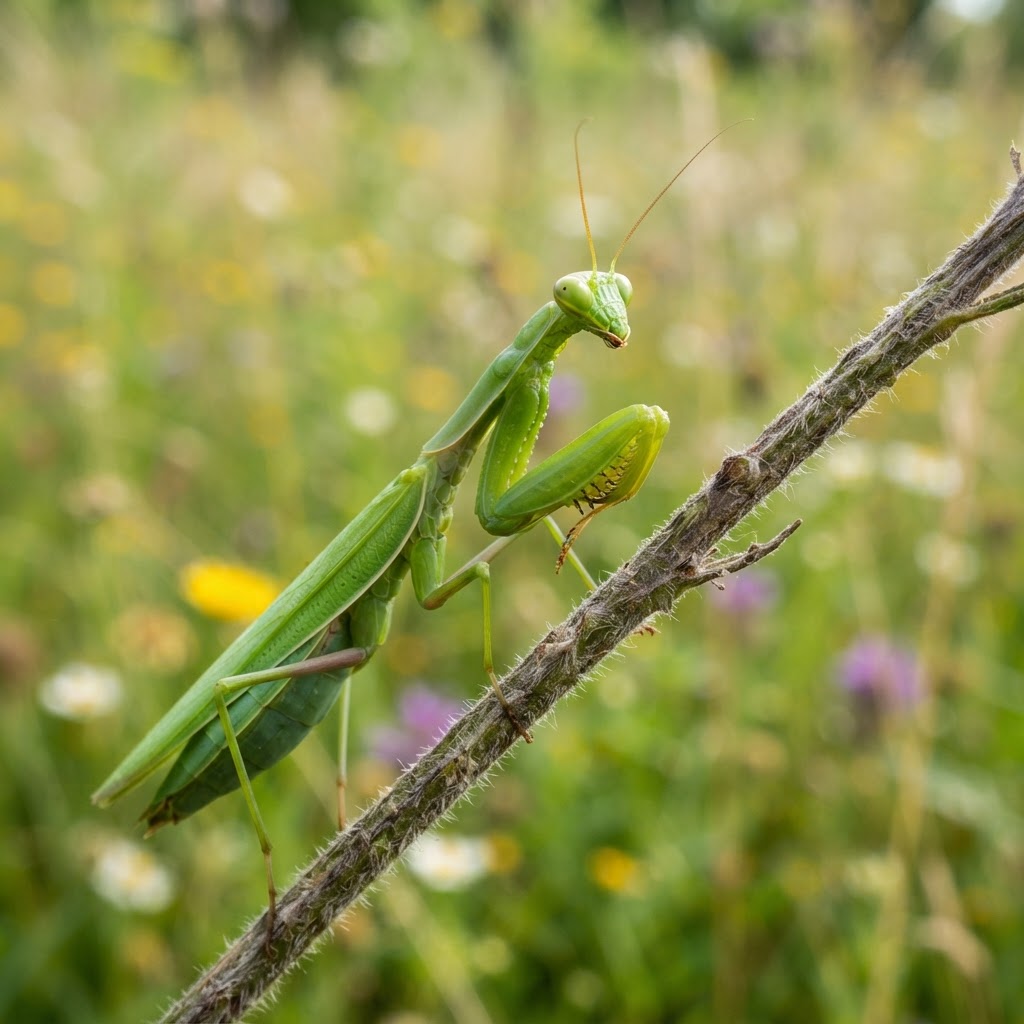
Praying mantids are a charismatic sight in Northeast Wisconsin gardens and old fields, where they ambush aphids, grasshoppers, caterpillars, and flies among the tall grasses and flowerbeds of Waupaca and Shawano county properties. Harmless to people and entirely beneficial, a mantid in your New London or Waupaca garden is a sign of a healthy, pesticide-light yard.
In Northeast Wisconsin
Tall grass and old fields at Hartman Creek State Park, the meadows at Gordon Bubolz Nature Preserve, and Waupaca and Shawano county gardens and prairie strips — watch for mantids ambushing among the flower stems.
A mantid eats aphids, grasshoppers, caterpillars, flies, beetles, and crickets — a true generalist ambush hunter.
Mantids patrol plants and ambush pest insects, helping protect vegetables, flowers, and ornamentals.
Mantids do not bite or sting; their front legs can pinch but rarely do, and they are not venomous.
Mantid egg cases (oothecae) are sold for garden release and hatch into dozens of tiny hunters.
Why Praying Mantids Matter
Praying mantids are large, slow-moving predatory insects that hunt by ambush. With their spined, raptorial front legs held in a 'praying' posture, they wait motionless on plants and strike any insect that comes within reach — aphids, grasshoppers, caterpillars, flies, beetles, and crickets. Wisconsin has the native Carolina mantid and the introduced Chinese mantid. Mantids are generalists, so they eat both pests and beneficial insects, but they are a valued and fascinating part of natural garden pest control.
Common Praying Mantids in Wisconsin
Here are the common Praying Mantids found across Wisconsin, with the specific benefits each species provides to nature and to people.
Carolina Mantid
Benefits to NatureWisconsin's native mantid, smaller and green or brown; ambushes insects on garden plants and meadow flowers.
Benefits to HumansNative beneficial predator of aphids, grasshoppers, and caterpillars; preferred over the introduced species.
Chinese Mantid
Benefits to NatureA large introduced mantid, green or brown, now common across Wisconsin; ambushes insects and even small frogs.
Benefits to HumansEffective predator of large pest insects, but can also eat beneficial insects — a generalist.
Related Beneficial Species
These species do similar work in the Wisconsin landscape — explore how they fit together.
When They're Beneficial
- Ambushing aphids, grasshoppers, caterpillars, and flies on garden plants
- Patrolling vegetables, flowers, and ornamentals for pest insects
- Controlling crickets and beetles in meadows and field edges
- Indicating a healthy, pesticide-light garden with diverse insect life
When Mantids Become a Nuisance
Mantids are never a household pest. They do not bite, sting, or damage plants, food, or homes. They are generalist predators, so they will eat beneficial insects too — but that is nature, not a nuisance. There is no conflict with mantids; they are purely beneficial and fascinating to watch.
Ant ControlLiving Alongside Praying Mantids
Plant Diverse Flowers
A mix of flowering plants gives mantids hunting grounds and attracts the insects they feed on.
Avoid Broad Insecticides
Sprays that kill pest insects also kill the mantids that hunt them — let the predators do the work.
Buy Egg Cases
Mantid egg cases (oothecae) are sold for garden release; each hatches dozens of tiny hunters in spring.
Enjoy the Show
Mantids are fascinating to watch — a sign of a healthy, living garden. They are harmless to people.
When to Call a Pest Professional
Mantids are pure backyard allies and never need removal. The only reason to call is a grasshopper, caterpillar, or other pest outbreak too large for the mantids and other predators to handle.
- A grasshopper, caterpillar, or cricket outbreak is overwhelming your garden despite natural predators present
- Plant damage is spreading faster than the beneficial insects can control it
- You want to buy and release mantid egg cases but want guidance on placement
Mantids are allies, not pests. If grasshoppers or caterpillars are overwhelming your garden, we can help with targeted, pollinator-safe treatment.
Ant ControlPraying Mantids Quiz
How well do you know Wisconsin's praying mantids? Take this quick quiz to find out.