Lacewings
in Wisconsin
Lacewings are delicate, green, gauze-winged insects — and their larvae are nicknamed 'aphid lions' for good reason. A single lacewing larva can devour hundreds of aphids, plus mites, whiteflies, and caterpillars. They are completely harmless to people and are one of the most effective beneficial insects you can attract or buy for natural garden pest control.
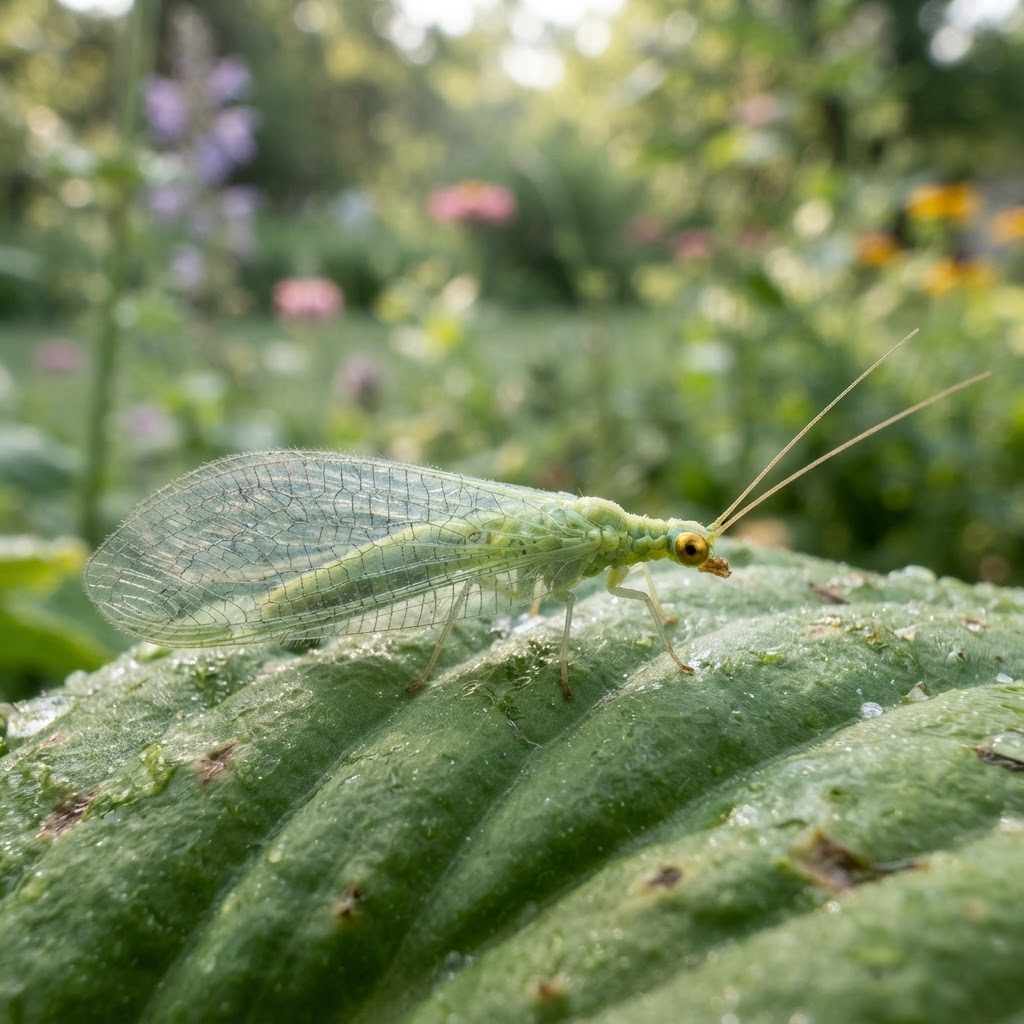
Green lacewings are a quiet workhorse of Northeast Wisconsin gardens, where their larvae — the 'aphid lions' — patrol the rose beds, vegetable plots, and orchards of Waupaca and Outagamie counties eating hundreds of aphids, mites, and caterpillars each. Attracting them with nectar flowers is free, chemical-free pest control.
In Northeast Wisconsin
Rose beds and vegetable plots across Waupaca and Outagamie county gardens, the gardens at Gordon Bubolz Nature Preserve, and any pesticide-light Northeast Wisconsin flowerbed — look for delicate green insects with lacy wings.
A lacewing larva can eat hundreds of aphids, mites, whiteflies, and small caterpillars before pupating.
Lacewing larvae also eat thrips, leafhoppers, mealybugs, and insect eggs — a generalist garden guardian.
Adults are delicate and gentle; larvae hunt pests and do not bite or sting people.
Lacewings are sold for release and drawn to gardens with nectar flowers and a few aphids to eat.
Why Lacewings Matter
Green lacewings are common, beneficial insects in Wisconsin gardens and fields. The adults are pale green with translucent, veined wings and feed on nectar, pollen, and sometimes honeydew. The larvae are the real pest controllers — 'aphid lions' with sickle-shaped jaws that pierce and drain aphids, mites, whiteflies, and small caterpillars. A single larva can consume hundreds of pests. Lacewings are a backbone of natural and organic pest control and are widely sold for release in gardens and greenhouses.
Common Lacewings in Wisconsin
Here are the common Lacewings found across Wisconsin, with the specific benefits each species provides to nature and to people.
Green Lacewing
Benefits to NatureDelicate pale-green insect with golden eyes and gauzy wings; larvae are voracious aphid predators.
Benefits to HumansWisconsin's most common lacewing; its 'aphid lion' larvae devour aphids, mites, and caterpillars.
Brown Lacewing
Benefits to NatureA smaller, brown lacewing of woods and shaded areas; larvae hunt aphids and soft-bodied pests.
Benefits to HumansLess common but equally beneficial; controls aphids in shaded and wooded garden areas.
Related Beneficial Species
These species do similar work in the Wisconsin landscape — explore how they fit together.
When They're Beneficial
- Hunting aphids on roses, vegetables, fruit trees, and ornamentals
- Controlling mites, whiteflies, thrips, and mealybugs as larvae
- Eating small caterpillars and insect eggs on garden plants
- Indicating a healthy, pesticide-light garden ecosystem
When Lacewings Become a Nuisance
Lacewings are never a household pest. They do not bite, sting, or damage plants, food, or homes. The adults may be attracted to lights at night but are harmless. There is no conflict with lacewings — they are purely beneficial and should be welcomed and protected.
Ant ControlLiving Alongside Lacewings
Plant Nectar Flowers
Dill, fennel, coriander, yarrow, and sweet alyssum feed adult lacewings, which then lay eggs near your pests.
Avoid Broad Insecticides
Sprays that kill aphids also kill the lacewing larvae that eat them — let the predators do the work.
Tolerate a Few Pests
A small aphid or mite population attracts lacewings to lay eggs; the larvae then wipe out the outbreak.
Buy and Release
Lacewing eggs are sold for garden and greenhouse release — a natural boost when pest pressure is high.
When to Call a Pest Professional
Lacewings are pure backyard allies and never need removal. The only reason to call is an aphid or mite outbreak too large for the lacewings and other predators to handle on their own.
- An aphid, mite, or whitefly outbreak is overwhelming your garden despite natural predators present
- Plant damage is spreading faster than the beneficial insects can control it
- You want to buy and release lacewings but want guidance on placement
Lacewings are allies, not pests. If aphids or other pests are overwhelming your garden, we can help with targeted, pollinator-safe treatment.
Ant ControlLacewings Quiz
How well do you know Wisconsin's lacewings? Take this quick quiz to find out.