Hoverflies
in Wisconsin
Hoverflies are Wisconsin's unsung garden heroes. They look like small bees or wasps but are completely harmless to people — they cannot sting. As larvae, they are voracious aphid predators, devouring hundreds of aphids each. As adults, they are important pollinators. A garden full of hoverflies is a garden with fewer aphids and more fruit.
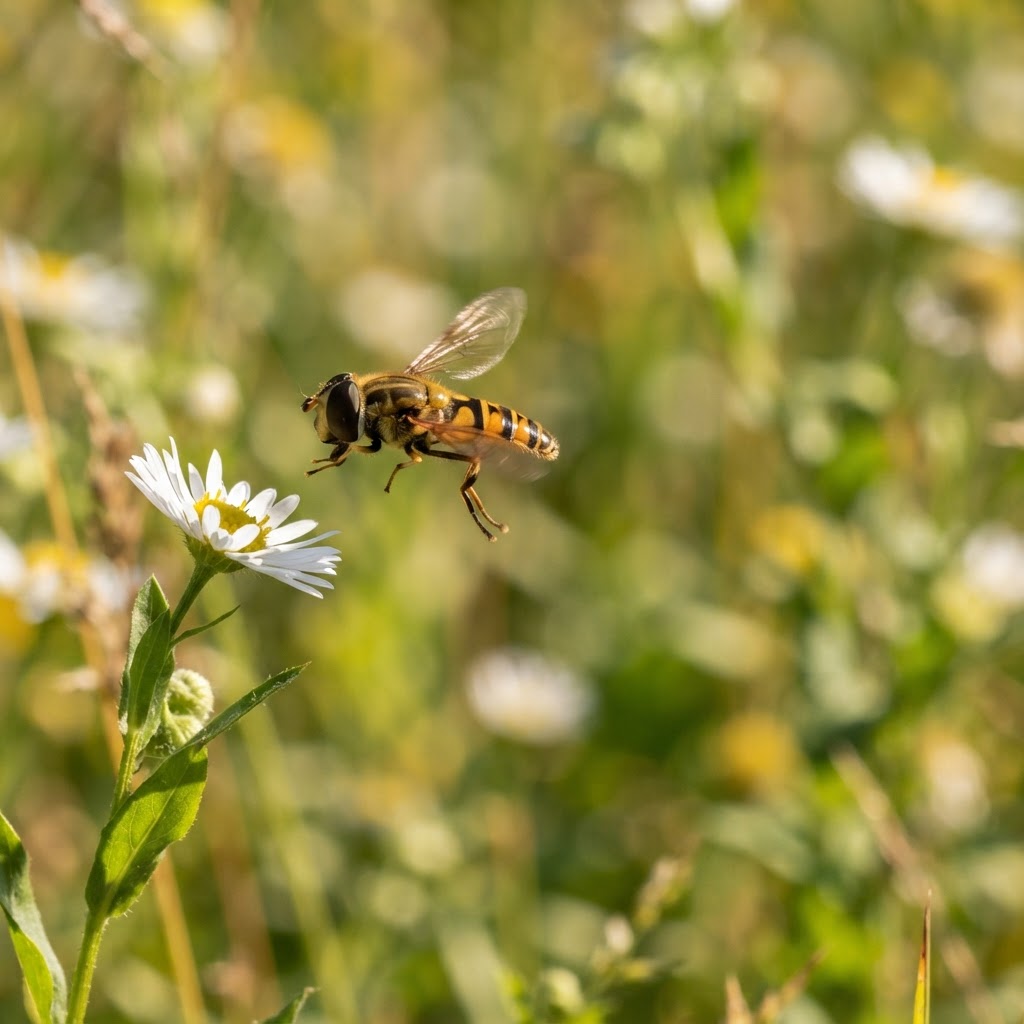
Hoverflies — those bee-mimicking, stingless flies that hover over Northeast Wisconsin gardens — are among the most effective aphid predators in Waupaca and Outagamie county flowerbeds and vegetable plots. Their larvae eat hundreds of aphids each, while the adults pollinate the same flowers that feed the region's bees.
In Northeast Wisconsin
Vegetable plots and flowerbeds across Waupaca and Outagamie county gardens, the wildflower meadows at Mosquito Hill Nature Center, and the native plantings at 1000 Islands — watch for bee-mimicking flies hovering in place.
A single hoverfly larva can eat hundreds of aphids before it pupates — one of nature's best aphid controls.
Adult hoverflies visit flowers and pollinate many crops and wildflowers, second only to bees in some gardens.
Despite their bee-like stripes, hoverflies cannot sting — they are flies, not wasps.
Hoverflies reproduce quickly, building up populations that respond to aphid outbreaks naturally.
Why Hoverflies Matter
Hoverflies (syrphid flies) are true flies that mimic bees and wasps for protection but are entirely stingless. Their larvae are legless, maggot-like predators that crawl over plants eating aphids, thrips, and other soft-bodied pests — a single larva can consume hundreds of aphids. The adults feed on nectar and pollen and are important pollinators of many flowers, fruits, and vegetables. Hoverflies are a cornerstone of natural and organic pest control in Wisconsin gardens and farms.
Common Hoverflies in Wisconsin
Here are the common Hoverflies found across Wisconsin, with the specific benefits each species provides to nature and to people.
Common Hoverfly
Benefits to NatureBee-mimicking flies that hover over flowers; larvae hunt aphids on garden and crop plants.
Benefits to HumansDevours aphids and pollinates flowers — one of the most beneficial insects in any Wisconsin garden.
Drone Fly
Benefits to NatureA honey-bee mimic; its larvae (rat-tailed maggots) live in wet organic matter and the adults pollinate.
Benefits to HumansAdults are strong pollinators of many flowers and crops; larvae help recycle decaying matter.
Related Beneficial Species
These species do similar work in the Wisconsin landscape — explore how they fit together.
When They're Beneficial
- Hunting aphids on roses, vegetables, fruit trees, and ornamentals
- Pollinating flowers, fruits, and vegetables as adults
- Controlling thrips and other soft-bodied garden pests as larvae
- Indicating a healthy, pesticide-light garden ecosystem
When Hoverflies Become a Nuisance
Hoverflies are never a household pest. They cannot sting, and they do not damage plants or homes. The only "conflict" is mistaken identity — people swat them thinking they are wasps. They are harmless and beneficial; leave them alone and they will control your aphids and pollinate your flowers.
Wasp Nest RemovalLiving Alongside Hoverflies
Plant Nectar Flowers
Alyssum, dill, fennel, yarrow, and coriander feed adult hoverflies, which then lay eggs near your aphids.
Avoid Broad Insecticides
Sprays that kill aphids also kill the hoverfly larvae that eat them — let the predators do the work.
Tolerate a Few Aphids
A small aphid population attracts hoverflies to lay eggs; the larvae then wipe out the outbreak.
Do Not Swat
Their bee-like stripes are a disguise — hoverflies cannot sting. Let them hover and do their job.
When to Call a Pest Professional
Hoverflies are pure backyard allies and never need removal — they can't sting and they control aphids. The only reason to call is a real wasp or yellowjacket nest you've mistaken them for, or an aphid outbreak too large for the hoverflies to handle.
- You see actual wasps or a paper or yellowjacket nest (hoverflies are stingless look-alikes — leave them be)
- An aphid outbreak is overwhelming your garden despite natural predators present
- You're unsure whether the insects in your yard are beneficial hoverflies or pest wasps
Hoverflies are allies, not pests. If you have real wasps or a nest, we can help — but these beneficial look-alikes should be left alone.
Wasp Nest RemovalHoverflies Quiz
How well do you know Wisconsin's hoverflies? Take this quick quiz to find out.