Freshwater Mussels
in Wisconsin
Freshwater mussels are the quiet heroes of Wisconsin's rivers and streams. A single mussel can filter several gallons of water a day, cleaning the water for fish, wildlife, and people. Wisconsin is home to nearly 50 species — and many are endangered.
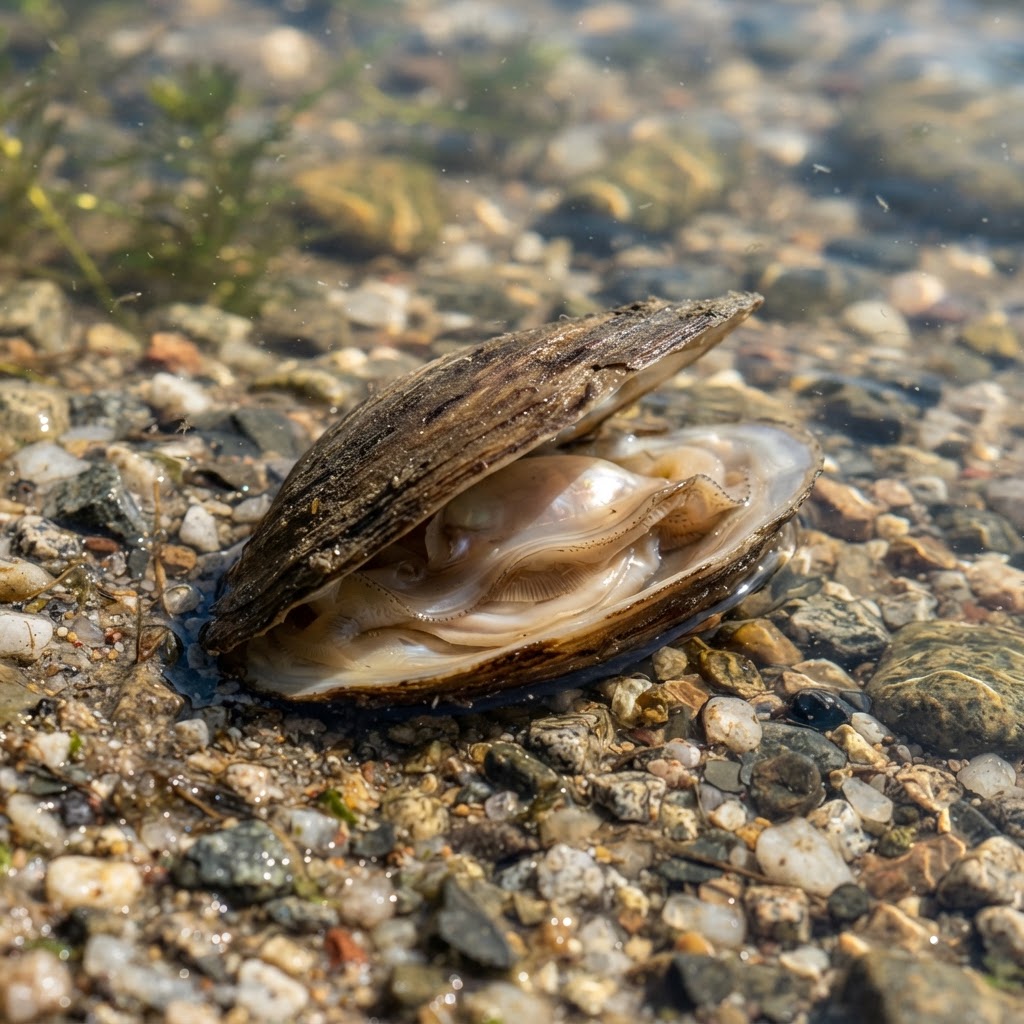
The Wolf and Fox River watersheds that drain Waupaca, Outagamie, and Winnebago counties are some of Wisconsin's richest mussel habitat. Species like the plain pocketbook and fatmucket filter the same waters that flow past New London, Oshkosh, and Neenah — a living gauge of how clean our Northeast Wisconsin rivers really are.
In Northeast Wisconsin
Wade the shallows of the Wolf River at Mukwa State Wildlife Area or the Fox River in Neenah — the plain pocketbook and fatmucket mussels you find in clean gravel are a living gauge of water quality.
A single mussel filters several gallons of water per day, removing algae, bacteria, and sediment — naturally cleaning rivers and streams.
Mussels stabilize streambeds and create habitat for aquatic insects and fish.
Their sensitivity to pollution makes them a living gauge of water quality — healthy mussel beds mean healthy water.
Mussels are food for otters, raccoons, muskrats, and fish, supporting the broader aquatic food web.
Why Freshwater Mussels Matter
Wisconsin's rivers and streams host nearly 50 species of freshwater mussels, making the state a mussel diversity hotspot. As filter feeders, they purify the water, cycle nutrients, and provide structure for other aquatic life. Many species are endangered or threatened due to dams, pollution, and invasive mussels. Their decline is an early warning sign for water quality across the region.
Common Freshwater Mussels in Wisconsin
Here are the common Freshwater Mussels found across Wisconsin, with the specific benefits each species provides to nature and to people.
Fatmucket
Benefits to NatureOne of Wisconsin's most widespread mussels, found in lakes and slow rivers. It filters algae and sediment from the water, improving clarity and providing microhabitat for aquatic insects.
Benefits to HumansIts presence signals clean water and supports the healthy fisheries Wisconsin anglers depend on. A lake with fatmuckets is usually a lake with good water quality.
Plain Pocketbook
Benefits to NatureUses a remarkable fish-mimic lure to attract host fish for its larvae, tying mussel reproduction to healthy fish populations. Common in Wisconsin's medium rivers.
Benefits to HumansA natural water filter that helps keep swimming and boating waters clean. Its fish-mimic display is one of nature’s most fascinating reproductive strategies.
Mapleleaf
Benefits to NatureA thick-shelled river mussel that stabilizes Wisconsin streambeds and lives for decades, cycling nutrients through the substrate. Its heavy shell helps anchor the river bottom.
Benefits to HumansA long-lived indicator of stable, healthy river ecosystems. Anglers benefit from the fish habitat its beds help create.
Washboard
Benefits to NatureOne of the largest and longest-lived mussels in Wisconsin; its heavy shell anchors streambeds and creates structure for other aquatic life. It can live more than half a century.
Benefits to HumansA champion water filter whose decades-long lifespan reflects long-term water quality. Its size makes it a flagship species for river conservation.
Higgins Eye
Benefits to NatureA federally endangered mussel of Wisconsin's large rivers; its survival depends on clean water and specific host fish. It is a top conservation priority for the state.
Benefits to HumansA protected species whose recovery is a measure of Wisconsin's commitment to clean water. Saving it means saving the river habitats people fish, boat, and swim in.
Related Beneficial Species
These species do similar work in the Wisconsin landscape — explore how they fit together.
When They're Beneficial
- Living in healthy rivers, streams, and lakes filtering water
- Stabilizing streambeds and supporting fish habitat
- Indicating clean, healthy aquatic ecosystems
- Supporting the aquatic food web as prey for wildlife
Invasive Mussels — A Different Story
Native freshwater mussels are never a household pest. But invasive zebra and quagga mussels, spread by boats and trailers, clog water intake pipes, smother native mussels, and damage aquatic ecosystems. They are a serious threat to Wisconsin waters — not a pest control issue, but a prevention one.
Aquatic Invasive Species — WI DNRLiving Alongside Freshwater Mussels
Protect Water Quality
Reduce fertilizer and pesticide runoff, maintain shoreline buffers, and support local watershed conservation efforts.
Clean, Drain, Dry Your Boat
Invasive mussels hitchhike on boats and trailers. Always clean, drain, and dry your watercraft before moving between lakes.
Never Relocate Mussels
Moving native mussels can harm them and spread disease. Leave them exactly where you find them.
Support Mussel Restoration
Wisconsin DNR and partners breed and restore endangered mussels — support and volunteer with these programs.
When to Call a Specialist
Native freshwater mussels are never a household pest and never need removal. The one situation that calls for action is discovering invasive zebra or quagga mussels — and that's a reporting and prevention matter, not a pest control call.
- You find an invasive zebra or quagga mussel (report it to the Wisconsin DNR; do not move it)
- A boat or dock has invasive mussels attached (clean, drain, and dry before moving it)
- You find a mussel you believe may be a protected or endangered species (note the location and report it)
Freshwater Mussels Quiz
How well do you know Wisconsin's freshwater mussels? Take this quick quiz to find out.