Frogs & Toads
in Wisconsin
Frogs and toads are voracious insect-eaters and one of nature's best indicators of water quality. A single toad can eat thousands of insects in a season. They are never a household pest — and their presence means your yard is healthy.
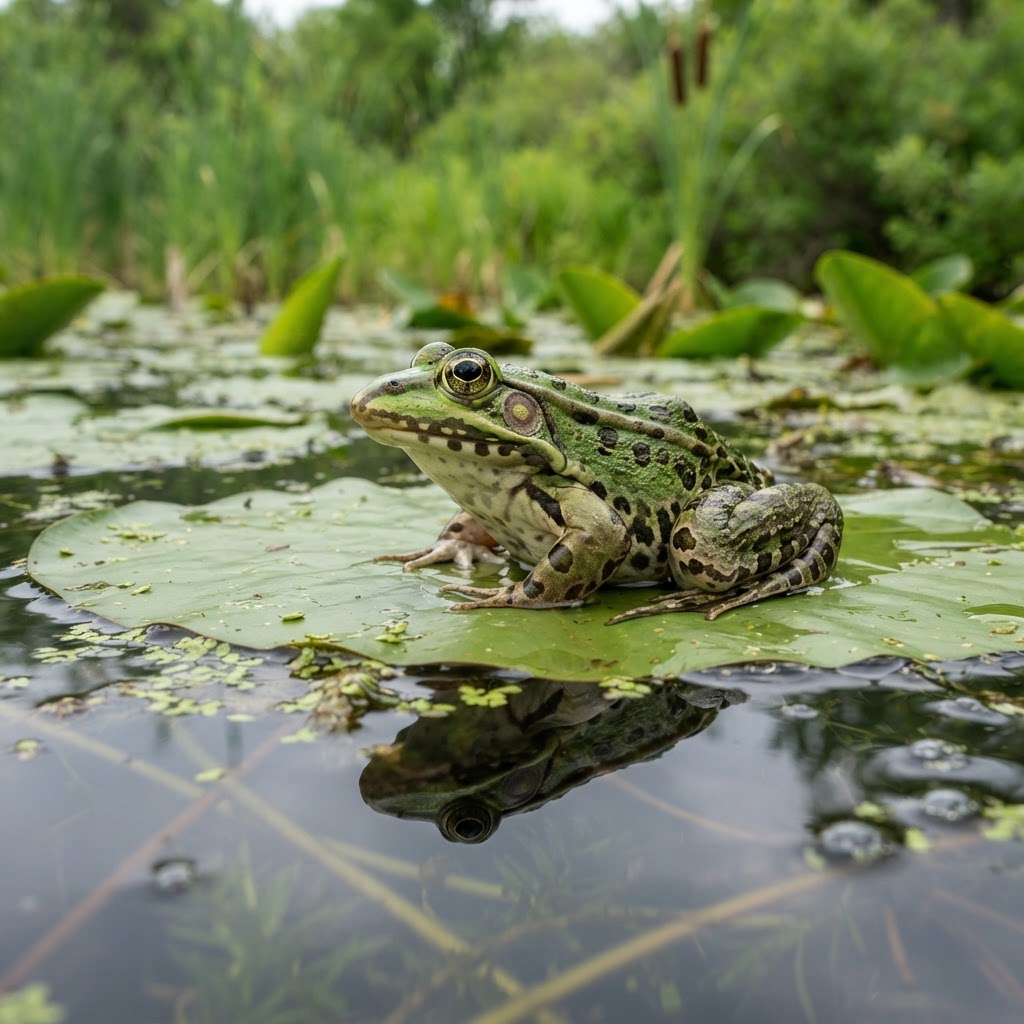
The wetlands, potholes, and drainage ditches of Waupaca and Shawano counties — especially around the Wolf River and its flowages — make Northeast Wisconsin excellent frog and toad country. Their chorus in spring is also a water-quality gauge: a healthy frog population in your New London or Clintonville yard means clean water and an insect population being kept in check for free.
In Northeast Wisconsin
On a spring evening, the potholes and ditches at Mukwa State Wildlife Area, the wetlands at 1000 Islands in Kaukauna, and any Waupaca County roadside pond come alive with chorus frogs and spring peepers.
A single toad can eat up to 10,000 insects in a season — mosquitoes, flies, slugs, and garden pests.
Amphibians absorb water through their skin, so their presence signals clean, pollution-free water.
Frogs and toads eat slugs, beetles, and caterpillars that damage gardens.
They are food for herons, raccoons, snakes, and fish, supporting the broader ecosystem.
Why Frogs & Toads Matter
Wisconsin's frogs and toads — from the spring peeper to the American toad — are both pest controllers and living water-quality sensors. Because they breathe and absorb water through their skin, they are highly sensitive to pollution, so a healthy frog population means a healthy environment. They breed in wetlands, ponds, and beaver ponds (often beaver-built) and feed heavily on insects.
Common Frogs & Toads in Wisconsin
Here are the common Frogs & Toads found across Wisconsin, with the specific benefits each species provides to nature and to people.
American Toad
Benefits to NatureWisconsin's most common toad, found in yards and gardens statewide. Eats slugs, beetles, and thousands of insects per season.
Benefits to HumansOne of the best garden pest controllers; a single toad can eat 10,000 insects in a season.
Spring Peeper
Benefits to NatureA tiny treefrog whose chorus signals the start of spring in Wisconsin wetlands. Eats small insects and ants.
Benefits to HumansThe sound of a Wisconsin spring; its presence means healthy wetlands nearby.
Green Frog
Benefits to NatureA common frog of Wisconsin ponds, lakes, and beaver ponds; eats insects, spiders, and small invertebrates.
Benefits to HumansHelps control mosquitoes and flies around ponds and lakes; a sign of clean water.
Leopard Frog
Benefits to NatureA spotted frog of wet meadows and stream edges; eats insects, spiders, and small invertebrates.
Benefits to HumansGarden and field pest control; sensitive to pollution, so its presence signals a healthy landscape.
Wood Frog
Benefits to NatureA forest frog that freezes solid in winter and thaws in spring, breeding in temporary woodland pools.
Benefits to HumansA remarkable survivor and forest insect controller; indicates healthy, undisturbed woodland.
Related Beneficial Species
These species do similar work in the Wisconsin landscape — explore how they fit together.
When They're Beneficial
- Eating mosquitoes, flies, slugs, and garden pests in your yard
- Indicating clean, pollution-free water and wetlands
- Serving as food for herons, fish, snakes, and other wildlife
- Breeding in ponds, wetlands, and beaver ponds away from your home
When Frogs Gather in Unwanted Numbers
Frogs and toads are never a household pest. Occasionally a loud chorus near a bedroom window or frogs drawn to a swimming pool can be a nuisance. The real issue is usually standing water or bright lights attracting insects. Reduce those and the frogs settle — never harm them, as many species are protected or declining.
Learn About Wisconsin AmphibiansLiving Alongside Frogs & Toads
Provide a Water Source
A small backyard pond gives frogs a place to breed and hunt, boosting your natural pest control.
Avoid Pesticides
Amphibians absorb chemicals through their skin. Skip broad insecticides and herbicides to keep frogs healthy.
Reduce Standing Water Near the House
Empty buckets and fix drainage so frogs are not drawn right up to your foundation.
Leave Leaf Litter & Brush
Toads shelter under leaves and logs. A brushy corner of the yard supports them through winter.
When to Call a Specialist
Frogs and toads are pure backyard allies and never need removal. The only reason to call is when a loud chorus or frogs drawn to a pool becomes a real nuisance — and the fix is reducing standing water and lights, not harming the frogs.
- A very loud frog chorus right outside a bedroom window is disrupting sleep
- Frogs are repeatedly falling into a swimming pool with no escape route
- You suspect a sick or deformed frog (report it to the Wisconsin DNR)
- You want to reduce the standing water and lights attracting frogs close to the house
Frogs & Toads Quiz
How well do you know Wisconsin's frogs & toads? Take this quick quiz to find out.