Bats
in Wisconsin
Before you think of bats as pests, consider this: a single bat can eat 1,000 mosquitoes in an hour and up to 8,000 insects in a single night. Wisconsin's bats are among the most effective natural pest controllers on the planet — and they need our help.
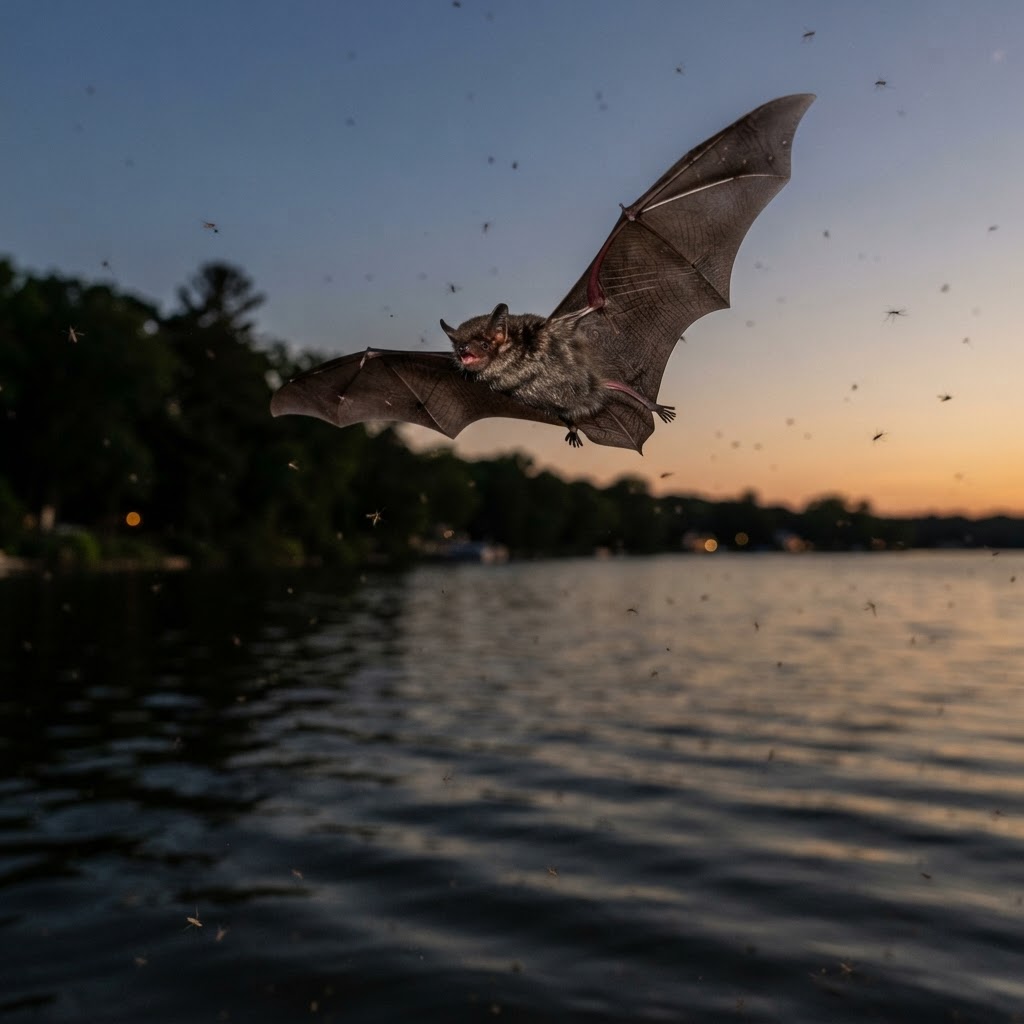
Northeast Wisconsin's wetlands and lakes — from the Wolf River bottomlands to the Shawano County flowages — produce the clouds of mosquitoes that make our region prime bat habitat. Little brown bats historically roosted in the old barns and attics across Waupaca and Outagamie counties, and Mid State has excluded colonies from homes in New London, Clintonville, and Appleton using one-way devices timed around the June–August maternity window.
Maternity season is underway — flightless pups mean humane exclusion must wait until mid-August when young bats can fly. Never seal entry points during this window.
In Northeast Wisconsin
Watch at dusk over the Wolf River at Hartman Creek State Park, above the flowages at Shawano Lake, or along the Fox River at 1000 Islands Environmental Center in Kaukauna — all prime bat-foraging habitat.
A single little brown bat can consume 1,000+ mosquitoes per hour, reducing mosquito populations around your property naturally.
Bats save Wisconsin agriculture millions of dollars each year by eating crop pests like moths, beetles, and flies.
Some bat species pollinate plants and disperse seeds, supporting healthy ecosystems.
All Wisconsin bats are protected. It is illegal to harm or kill them — exclusion must be humane and timed correctly.
Why Bats Matter
Wisconsin is home to several bat species, including the little brown bat and big brown bat. As the primary predators of night-flying insects, they regulate mosquito, moth, and beetle populations that would otherwise boom unchecked. Their decline would mean more mosquitoes, more crop damage, and more pesticide use. Unfortunately, White-nose Syndrome has devastated cave-hibernating bat populations across North America, making every remaining colony critically important.
Common Bats in Wisconsin
Here are the common Bats found across Wisconsin, with the specific benefits each species provides to nature and to people.
Little Brown Bat
Benefits to NatureOne of Wisconsin's most abundant bats, hunting aquatic insects over lakes, rivers, and wetlands. Its presence is an indicator of healthy wetland ecosystems. Once common statewide, it has been devastated by White-nose Syndrome and is now state-threatened.
Benefits to HumansA single little brown bat can eat 1,000+ mosquitoes per hour, providing natural mosquito control around Wisconsin lakes and yards. A small colony means fewer mosquitoes and less need for chemical sprays at your cabin or home.
Big Brown Bat
Benefits to NatureA robust, adaptable predator of beetles, moths, and agricultural pests that commonly roosts in Wisconsin barns, attics, and trees. It is more resistant to White-nose Syndrome than little browns, so it remains widespread.
Benefits to HumansConsumes large numbers of crop-damaging beetles and moths, saving Wisconsin farmers and gardeners money on pesticides. It is the bat most likely to live near people — usually a benefit, occasionally a nuisance.
Northern Long-eared Bat
Benefits to NatureA forest-dwelling bat that gleans insects from foliage and tree bark in Wisconsin's northern hardwood forests. Federally threatened due to White-nose Syndrome, which has caused steep population declines.
Benefits to HumansProvides silent, chemical-free control of forest and orchard insect pests. Protecting its forest habitat supports Wisconsin's timber and orchard industries by keeping pest pressure low.
Eastern Red Bat
Benefits to NatureA solitary, tree-roosting bat that migrates south in winter rather than hibernating in caves. It feeds heavily on moths, including forest and crop pests, and roosts in Wisconsin's deciduous trees.
Benefits to HumansHelps suppress moth populations that damage Wisconsin forests, orchards, and crops. Because it migrates, it is less affected by White-nose Syndrome and remains an important seasonal pest controller.
Hoary Bat
Benefits to NatureWisconsin's largest bat, roosting in trees and feeding on large moths and beetles. A long-distance migrant that passes through and summers in the state.
Benefits to HumansTargets major crop pests like cutworm and corn borer moths, protecting Wisconsin agricultural yields. Its size lets it take larger insect pests that smaller bats cannot handle.
Related Beneficial Species
These species do similar work in the Wisconsin landscape — explore how they fit together.
When They're Beneficial
- Roosting in trees, barns, or dedicated bat houses away from living spaces
- Foraging over your yard, lakes, and fields at dusk
- Controlling mosquito and agricultural pest populations naturally
- Contributing to a balanced local ecosystem
When Bats Move Into Your Attic
Bats are wonderful neighbors — until they roost inside your home. A colony in your attic can damage insulation, create odor, and expose your family to histoplasmosis from guano and the small risk of rabies. Because bats are protected, removal must be done humanely and at the right time of year, avoiding maternity season.
Bat Control & ExclusionLiving Alongside Bats
Install a Bat House
Give bats a safe place to roost away from your home. A well-placed bat house can host a colony that eats thousands of mosquitoes nightly.
Avoid Disturbing Maternity Colonies
From June through mid-August, baby bats cannot fly. Never exclude bats during this window — wait until young can fly and exit on their own.
Report White-nose Syndrome
If you see bats flying in winter or dead bats near hibernation sites, report it to the Wisconsin DNR to help track this deadly disease.
Seal Your Home — Humanely
Prevent bats from entering your living space by sealing gaps, but only after confirming no bats are trapped inside. One-way exclusion devices let bats leave but not return.
When to Call Wildlife Specialists
Most bats are best left alone to hunt insects, but a few situations call for a professional. Because all Wisconsin bats are protected, removal must be humane and timed to avoid maternity season — never attempt it yourself with poisons or by sealing entry points.
- A colony roosting in your attic, eaves, or walls (guano buildup, staining, or scratching at dusk)
- A bat found flying inside your living space
- A sick, grounded, or dead bat — do not touch it; contact a professional or the Wisconsin DNR
- Signs of a maternity colony between June and mid-August (humane exclusion must wait until pups can fly)
Bats belong in Wisconsin — just not in your attic. If a colony has moved into your home, we remove them humanely and seal them out, legally and safely.
Bat Control & ExclusionBats — Our Work
When these animals become a real problem, here's how Mid State has handled it for Northeast Wisconsin homeowners.
Bats Quiz
How well do you know Wisconsin's bats? Take this quick quiz to find out.