Woodpeckers
in Wisconsin
Woodpeckers are woodland doctors, drilling into trees to eat wood-boring beetles, ants, and other insects that damage forests. They also create nest cavities that shelter many other birds. They are a benefit in the woods — and a problem when they drum on your siding.
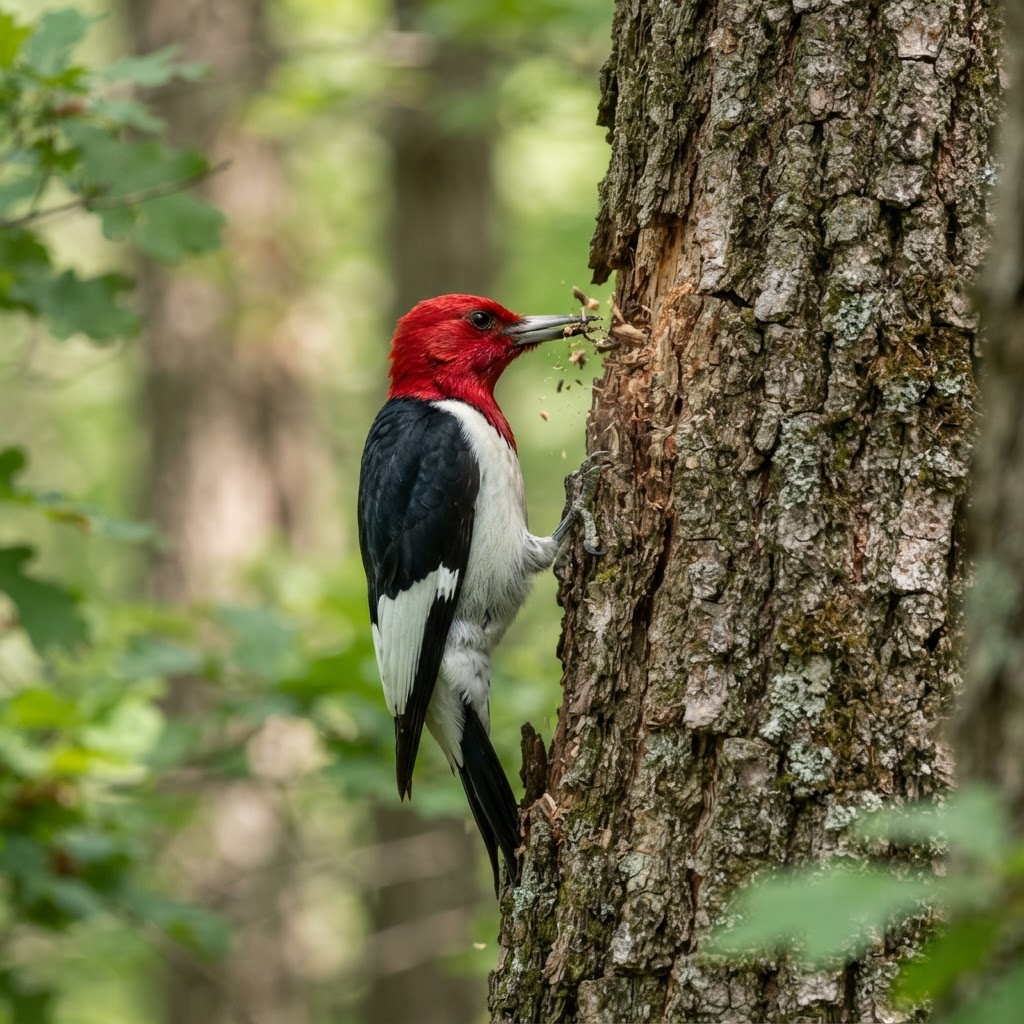
Downy and hairy woodpeckers are common at Northeast Wisconsin suet feeders year-round, while red-bellied and pileated woodpeckers work the mature trees and old-growth pockets of Waupaca and Shawano counties. They become a problem mainly on the cedar and T-111 siding common on older Waupaca and Outagamie county homes, where spring drumming and fall cavity-digging can damage siding.
Drumming season — males drum on siding and gutters to mark territory. Deterrents and visual scare devices work best before the habit sets in for the season.
In Northeast Wisconsin
Downy and hairy woodpeckers work the mature trees at Hartman Creek State Park; red-bellied and pileated woodpeckers favor the old-growth pockets at Gordon Bubolz and the Niagara escarpment woods at High Cliff.
Woodpeckers eat wood-boring beetles, carpenter ants, and other insects that damage and kill trees.
Their nest holes shelter bluebirds, owls, squirrels, and other wildlife that can't dig their own.
They speed the breakdown of dead and dying trees, returning nutrients to the soil.
All Wisconsin woodpeckers are protected by state and federal law — control must be humane and legal.
Why Woodpeckers Matter
Wisconsin's woodpeckers — including the downy, hairy, red-bellied, pileated, and northern flicker — are keystone cavity creators. By drilling nest holes, they provide homes for dozens of other species. By feeding on wood-boring insects, they help keep forests healthy. Their drumming is communication, not just feeding. All are protected by law.
Common Woodpeckers in Wisconsin
Here are the common Woodpeckers found across Wisconsin, with the specific benefits each species provides to nature and to people.
Downy Woodpecker
Benefits to NatureWisconsin's smallest and most common woodpecker, found at backyard feeders and in woods. Eats insects, suet, and seeds.
Benefits to HumansFamiliar backyard visitor; eats insect pests in trees and shrubs.
Hairy Woodpecker
Benefits to NatureA larger look-alike of the downy; drills deeper for wood-boring beetles and ants.
Benefits to HumansMore effective forest pest controller than the downy; a sign of mature woods.
Red-bellied Woodpecker
Benefits to NatureA medium woodpecker of Wisconsin woodlands and suburbs; eats insects, fruit, and seeds.
Benefits to HumansAdaptable backyard bird that helps control tree insects; increasingly common at feeders.
Pileated Woodpecker
Benefits to NatureWisconsin's largest woodpecker; chases carpenter ants in dead trees and creates large nest cavities used by many species.
Benefits to HumansKeystone cavity creator; its big holes shelter owls, ducks, and squirrels.
Northern Flicker
Benefits to NatureA ground-feeding woodpecker that eats ants — often hundreds at a sitting.
Benefits to HumansMajor ant controller in lawns and fields; a unique, beneficial woodpecker.
Related Beneficial Species
These species do similar work in the Wisconsin landscape — explore how they fit together.
When They're Beneficial
- Drilling into dead and dying trees for wood-boring beetles and ants
- Creating nest cavities that shelter other birds and wildlife
- Controlling carpenter ants and forest insect pests
- Foraging in woods and at backyard feeders away from your siding
When Woodpeckers Drum on Your House
Woodpeckers are beneficial in the woods, but they may drum on siding, trim, or metal to mark territory, or drill into wood siding for insects or a nest. This can damage your home. Because all woodpeckers are protected by law, control must be humane and legal — visual and physical deterrents, exclusion, and addressing the underlying insect problem.
Bird ControlLiving Alongside Woodpeckers
Address the Insect Problem
Woodpeckers often drill because insects are in the wood. Treating the underlying infestation removes the attraction.
Use Visual Deterrents
Reflective tape, owl decoys, and moving shiny objects can discourage drumming on siding.
Protect Vulnerable Surfaces
Netting or hardware cloth over the spot being damaged blocks access without harming the bird.
Preserve Dead Trees When Safe
Standing dead trees feed woodpeckers and give them a place to drum that is not your house.
When to Call Wildlife Specialists
Woodpeckers are protected by law, so any control must be humane and legal. When drumming or drilling damages your siding, a professional can deploy legal deterrents and address the underlying insect problem.
- A woodpecker is repeatedly drumming on or drilling into your siding, trim, or roof
- Visible holes or damage in your home's exterior from woodpecker activity
- Drumming is disrupting sleep and DIY deterrents aren't working
- You suspect insects in the wood are attracting the woodpecker (treat the infestation first)
Woodpeckers belong in your trees — not your siding. If one is damaging your home, we use humane, legal deterrents to stop it.
Bird ControlWoodpeckers Quiz
How well do you know Wisconsin's woodpeckers? Take this quick quiz to find out.