Hawks
in Wisconsin
Hawks are Wisconsin's daytime rodent controllers. A single red-tailed hawk can eat hundreds of mice, voles, and rabbits a year, protecting crops, stored grain, and homes from rodent damage. They are never a household pest — they are a sign of a healthy, prey-rich landscape worth protecting, and all hawks are protected by law.
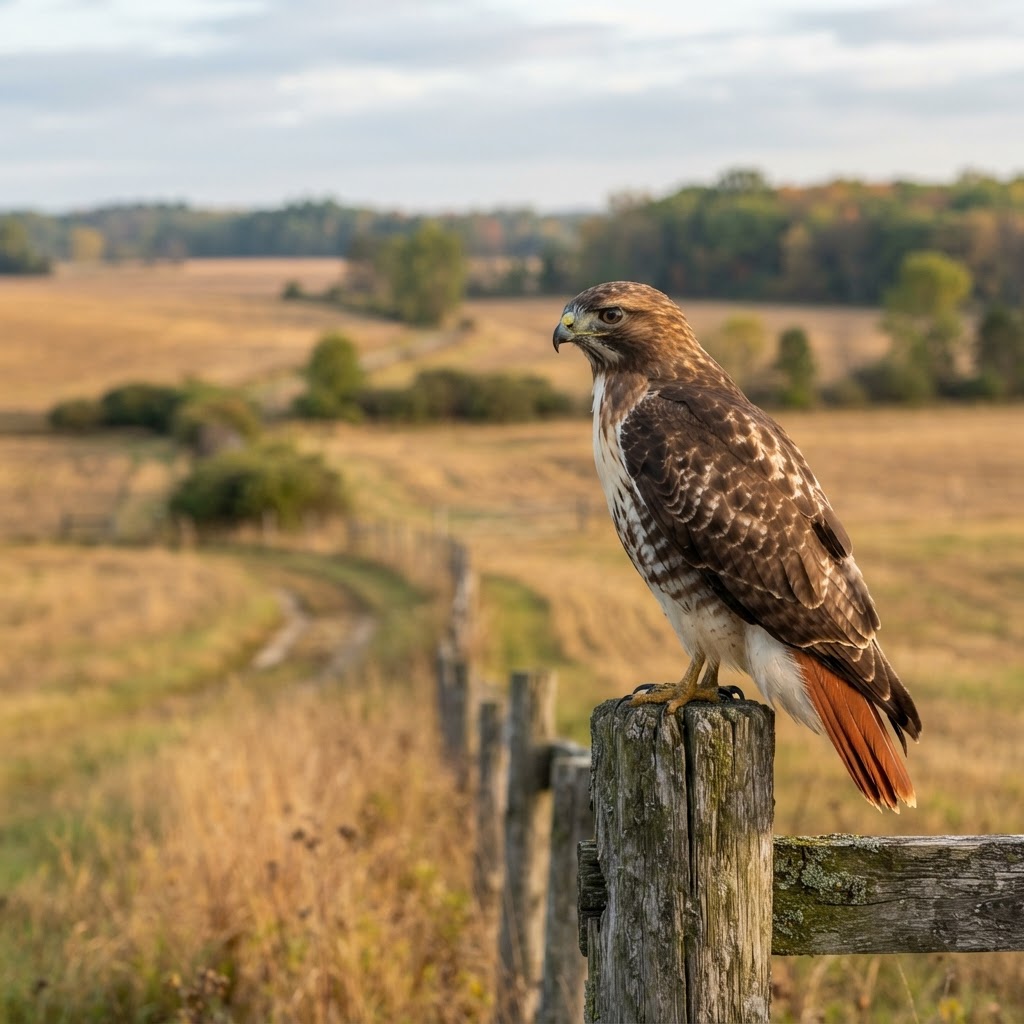
Red-tailed hawks are the most common large raptor across Northeast Wisconsin's open country, perched on fence posts and power poles along the fields of Waupaca, Outagamie, and Shawano counties. A hawk hunting the field edges around your New London or Waupaca property is taking hundreds of mice and rabbits a year — all protected by federal and state law.
In Northeast Wisconsin
Red-tailed hawks perch on fence posts and power poles along the fields of Waupaca, Outagamie, and Shawano counties, the open country at High Cliff State Park, and the agricultural edges around Brillion.
A red-tailed hawk family consumes hundreds of mice, voles, and rabbits per year — far more effective than traps.
Hawks hunt by day, complementing owls that hunt by night — round-the-clock rodent control.
Their presence signals a healthy, prey-rich ecosystem with clean open habitat.
All Wisconsin hawks are protected by state and federal law — it is illegal to harm them or disturb their nests.
Why Hawks Matter
Wisconsin's hawks — including red-tailed hawks, Cooper's hawks, and sharp-shinned hawks — are diurnal raptors that hunt the mice, voles, rabbits, and birds that would otherwise overrun fields and neighborhoods. Red-tailed hawks patrol open country from roadside perches; Cooper's and sharp-shinned hawks hunt wooded edges and backyards for birds and squirrels. Because they need healthy habitat and abundant prey, their presence is a sign of a balanced landscape. All hawks are protected by law.
Common Hawks in Wisconsin
Here are the common Hawks found across Wisconsin, with the specific benefits each species provides to nature and to people.
Red-tailed Hawk
Benefits to NatureWisconsin's most common hawk, hunting mice, voles, and rabbits from roadside perches by day.
Benefits to HumansVisible, daytime rodent control across fields and highways; a sign of healthy open habitat.
Cooper's Hawk
Benefits to NatureA woodland hawk that hunts birds and squirrels in wooded suburbs and edges.
Benefits to HumansControls overabundant bird and squirrel populations; increasingly common in Wisconsin towns.
Sharp-shinned Hawk
Benefits to NatureWisconsin's smallest hawk, a swift hunter of small birds at woodland edges.
Benefits to HumansKeeps small-bird populations balanced; a migratory visitor and nester in the north.
Related Beneficial Species
These species do similar work in the Wisconsin landscape — explore how they fit together.
When They're Beneficial
- Hunting mice, voles, and rabbits in fields, pastures, and around outbuildings
- Keeping rodent and rabbit populations in check naturally by day
- Indicating a healthy, prey-rich landscape with open habitat
- Nesting in tall trees away from living spaces
When Hawks Become a Nuisance
Hawks are almost never a household pest. Occasionally a Cooper's hawk will prey on backyard songbirds at a feeder, or a hawk will dive at people near its nest. Because all hawks are protected by federal law, any conflict must be resolved with humane deterrence — never harm. Moving a feeder a few feet or giving a nest space usually solves it.
Bird ControlLiving Alongside Hawks
Move Feeders
If a hawk is hunting songbirds at your feeder, move the feeder near cover (shrubs) so small birds can escape — never harm the hawk.
Protect Poultry Humanely
Use covered runs and netting to protect backyard chickens from hawks — never harm the hawk, which is illegal.
Give Nests Space
A hawk diving at you in spring is defending its nest; simply step back and give the family room until fledging.
Avoid Rodenticides
Poisoned rodents sicken and kill the hawks that eat them. Use traps or exclusion instead.
When to Call Wildlife Specialists
Hawks are protected by law and almost never a household pest. The rare conflict — a hawk targeting poultry or diving at people near a nest — must be resolved with humane, legal deterrence, never harm.
- A hawk is repeatedly diving at people near its nest and giving space isn't resolving it
- A hawk is preying on backyard poultry despite covered runs and netting
- A hawk has nested in a genuinely dangerous location, such as over an entryway
- You find an injured or grounded hawk — do not touch it; call a wildlife rehabilitator
Hawks are allies, not pests. If one is targeting your poultry or diving near a nest, we can help with humane, legal bird deterrence.
Bird ControlHawks Quiz
How well do you know Wisconsin's hawks? Take this quick quiz to find out.