Snakes
in Wisconsin
Snakes are among the most misunderstood animals in Wisconsin. The vast majority are harmless, and they provide excellent free rodent and pest control. Of Wisconsin's roughly 20 snake species, only two are venomous — and both are rare and protected. The goal is to keep snakes in the yard, not in your basement.
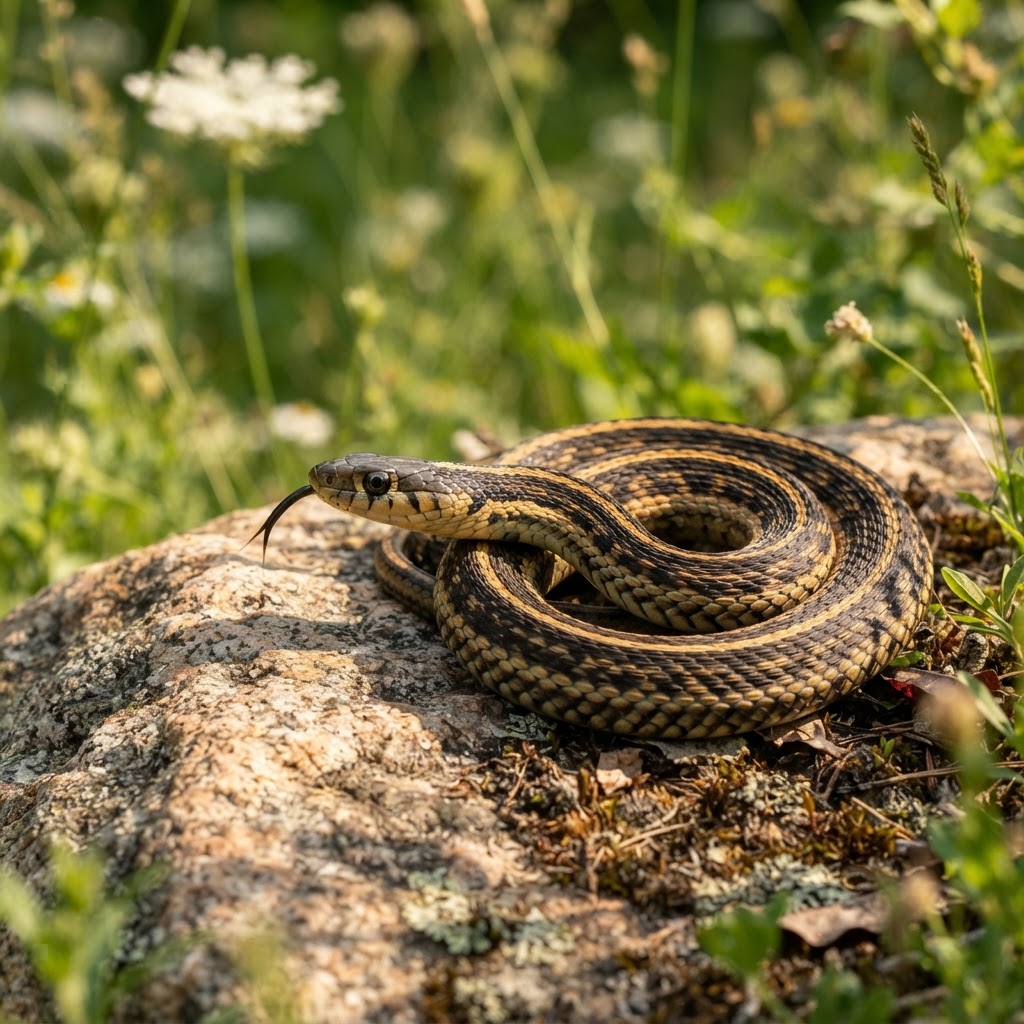
Northeast Wisconsin's mix of wetland, field, and forest — from the Wolf River bottoms to the sandy uplands of Shawano County — supports a healthy snake population, almost entirely harmless. Garter snakes are everywhere in Waupaca and Outagamie county yards; the only venomous species, the timber rattlesnake and massasauga, are rare and protected. Mid State relocates snakes that end up in basements or window wells.
Snakes seek overwintering dens as temperatures drop — the time they most often turn up in basements, window wells, and crawl spaces.
In Northeast Wisconsin
Sunny rock outcrops at High Cliff State Park, the wetland edges at Mukwa State Wildlife Area, and the grassy field borders at Navarino Wildlife Area are all good places to spot harmless garter snakes sunning.
Many Wisconsin snakes eat mice, voles, and rats, helping keep rodent populations in check around homes and farms.
Garter snakes and others eat slugs, insects, and grubs that damage gardens.
Of Wisconsin's ~20 snake species, only two are venomous — the timber rattlesnake and eastern massasauga — and both are rare and protected.
Snakes are food for hawks, owls, and other wildlife, supporting the broader ecosystem.
Why Snakes Matter
Wisconsin is home to roughly 20 snake species, from the common garter snake to the protected timber rattlesnake. As middle-tier predators, they regulate rodent and insect populations and serve as prey for birds of prey and mammals. Most are completely harmless to people and provide real, free pest control. The two venomous species are rare, shy, and found only in specific habitats — encounters are uncommon.
Common Snakes in Wisconsin
Here are the common Snakes found across Wisconsin, with the specific benefits each species provides to nature and to people.
Common Garter Snake
Benefits to NatureWisconsin's most familiar snake, found statewide in yards, gardens, and fields. Eats slugs, insects, earthworms, and small rodents.
Benefits to HumansExcellent garden pest control, eating slugs and grubs that damage plants — and completely harmless to people.
Fox Snake
Benefits to NatureA large, harmless snake that hunts rodents and birds' eggs in fields and around farms. Often mistaken for a rattlesnake but is non-venomous.
Benefits to HumansMajor rodent controller around Wisconsin barns and farms; harmless to people despite its size.
Milk Snake
Benefits to NatureA strikingly patterned, harmless snake that eats rodents and other small animals. Often found around old fields and outbuildings.
Benefits to HumansControls mice and rats around rural Wisconsin properties; harmless and beneficial.
Bullsnake
Benefits to NatureA large, powerful constrictor of western Wisconsin that hunts rodents, including pocket gophers.
Benefits to HumansSignificant rodent control in agricultural areas; harmless to people and beneficial on farms.
Timber Rattlesnake
Benefits to NatureOne of Wisconsin's two venomous snakes, found only in specific bluff and forest habitats. Rare and protected by state law.
Benefits to HumansRarely encountered and protected; an important rodent controller in its limited range. Give it space and call a professional if needed.
Related Beneficial Species
These species do similar work in the Wisconsin landscape — explore how they fit together.
When They're Beneficial
- Hunting rodents and slugs in your garden, fields, or around outbuildings
- Serving as prey for hawks, owls, and other wildlife
- Controlling pest insect and grub populations naturally
- Living under rocks, logs, or brush piles away from your home
When Snakes Slip Into Your Basement
Snakes are beneficial outdoors, but they may enter basements, crawl spaces, or living areas in search of prey or shelter — especially garter snakes in spring and fall. They are not destructive and most are harmless, but a snake indoors usually means rodents are too. Humane removal and sealing entry points solves both problems.
Wildlife ControlLiving Alongside Snakes
Keep Rodents in Check
Snakes follow their food. Controlling mice and rats around your home removes the main reason snakes come close.
Seal Entry Points
Caulk foundation cracks and gaps around pipes so snakes cannot enter basements and crawl spaces.
Leave Outdoor Snakes Alone
A garter snake in your garden is free pest control — let it work. Most will avoid people.
Learn to ID Wisconsin Snakes
Knowing the harmless majority from the two rare venomous species helps you respond calmly. When in doubt, keep your distance and call a professional.
When to Call Wildlife Specialists
Most Wisconsin snakes are harmless and best left alone, but a snake indoors or a suspected venomous snake on your property is a good time to call a professional for safe, humane removal.
- A snake has entered your basement, crawl space, or living area
- You see a snake you cannot identify and want it removed safely
- You suspect a timber rattlesnake or eastern massasauga (rare and protected — keep your distance)
- Snakes are repeatedly entering your home (often a sign of a rodent issue to address)
Snakes belong in your garden — not your basement. If one has slipped indoors, we remove it humanely and help seal it out.
Wildlife ControlSnakes — Our Work
When these animals become a real problem, here's how Mid State has handled it for Northeast Wisconsin homeowners.
Bat Exclusion — Waupaca Attic
A bat colony in a Waupaca attic was excluded humanely and legally with one-way doors, and every entry point sealed so they could not return.
Squirrel Removal — Waupaca Attic & Exclusion
Squirrels chewing into a Waupaca attic were removed with one-way doors and the damaged vents and entry holes sealed to keep them out.
Raccoon Removal — New London Chimney & Attic
A raccoon in a New London chimney and attic was removed humanely, the chimney capped, and the roofline sealed to prevent re-entry.
Snakes Quiz
How well do you know Wisconsin's snakes? Take this quick quiz to find out.