Opossums
in Wisconsin
Opossums are gentle, misunderstood scavengers that eat ticks, rodents, and carrion. They're North America's only marsupial, they've expanded their range north into Wisconsin, and they're remarkably resistant to rabies. They're one of the most beneficial backyard animals you can have.
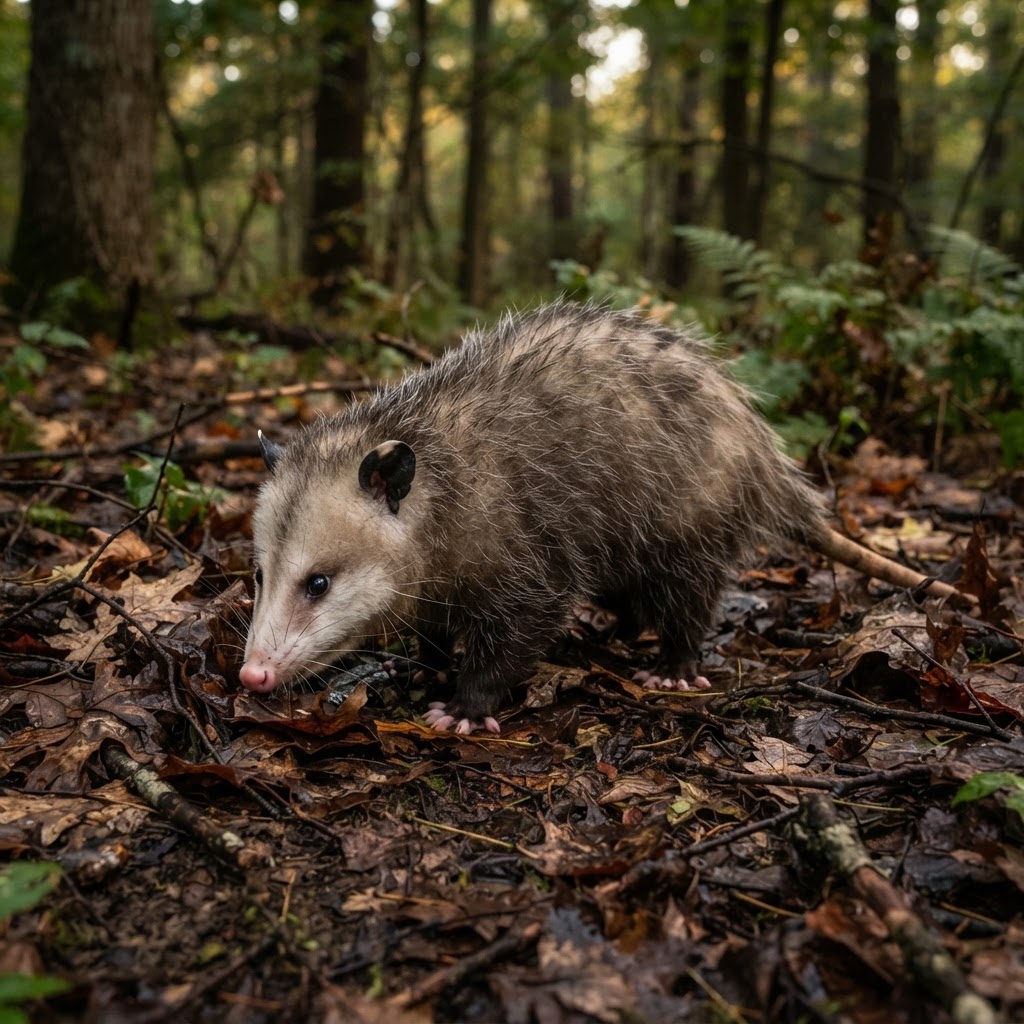
Opossums are a common sight across Northeast Wisconsin's rural townships and even in Appleton and Oshkosh neighborhoods, where they clean up carrion, fallen fruit, and — importantly — thousands of ticks. Their resistance to rabies and appetite for pests make them welcome neighbors in most Waupaca and Shawano county yards; Mid State only relocates them when they den under porches or decks.
In Northeast Wisconsin
Watch rural road edges after dark around New London and Clintonville, the farm borders at Navarino Wildlife Area, and even Appleton and Oshkosh neighborhoods where they forage for carrion and fallen fruit.
Opossums groom themselves meticulously and consume thousands of ticks per season, helping reduce Lyme disease risk.
They eat cockroaches, mice, snails, slugs, and other garden and household pests.
As scavengers, opossums remove carrion and rotting fruit, recycling nutrients and keeping the environment clean.
Their unusually low body temperature makes opossums highly resistant to rabies — far more so than raccoons or skunks.
Why Opossums Matter
The Virginia opossum is North America's only marsupial and the only marsupial found in Wisconsin. Warming winters and human food sources have pushed their range north into the state, where they are now common. As generalist scavengers and omnivores, they clean up carrion, eat pests, and rarely cause real damage. Their famous 'playing possum' is an involuntary stress response, not a deliberate act — and it usually resolves on its own within minutes to hours.
Common Opossums in Wisconsin
Here are the common Opossums found across Wisconsin, with the specific benefits each species provides to nature and to people.
Virginia Opossum
Benefits to NatureNorth America's only marsupial and the sole opossum species in Wisconsin. A generalist scavenger that cleans up carrion, eats pests, and carries young in a pouch like a kangaroo. Its range has expanded north into Wisconsin with warming winters.
Benefits to HumansEats thousands of ticks per season, controls mice and cockroaches, and is highly resistant to rabies — a quiet backyard ally. Its low body temperature makes it one of the least likely wild mammals to carry disease.
Related Beneficial Species
These species do similar work in the Wisconsin landscape — explore how they fit together.
When They're Beneficial
- Foraging outdoors at night, eating ticks, mice, snails, and cockroaches
- Scavenging carrion and rotting fruit, recycling nutrients back into the soil
- Helping suppress tick-borne disease and garden-pest populations
- Living under sheds or in brush piles without entering your home
When Opossums Den Under Your Deck
Opossums are beneficial outdoors, but they may den under decks, porches, or sheds, rummage through trash, and startle pets. They are non-aggressive and rarely carry rabies, so removal should always be humane — exclusion and relocation, never poison or harm.
Wildlife ControlLiving Alongside Opossums
Secure Trash & Compost
Use lidded, raccoon-resistant bins and enclosed compost to remove the easy food sources that attract opossums.
Seal Denning Spots
Close off openings under decks, porches, and sheds — but only after confirming no opossum is inside. One-way doors let them leave safely.
Don't Fear 'Playing Possum'
If an opossum freezes and plays dead, leave it alone. It is an involuntary stress response that passes on its own within minutes to a few hours.
Keep Pet Food Indoors
Outdoor pet food and fallen birdseed are major attractants. Feed pets inside and clean up feeders to keep opossums foraging in the wild.
When to Call Wildlife Specialists
Opossums are gentle backyard allies, but when one dens under a deck or porch or won't move on, humane exclusion — never poison — is the right call.
- An opossum has denned under your deck, porch, or shed and won't leave
- An opossum is raiding trash or pet food repeatedly despite securing attractants
- A sick, injured, or orphaned opossum — do not handle it; call a wildlife rehabilitator
- You're uncomfortable performing one-way exclusion yourself
Opossums belong in your yard — just not under your deck. If one has denned too close to your home, we remove it humanely and seal it out.
Wildlife ControlOpossums — Our Work
When these animals become a real problem, here's how Mid State has handled it for Northeast Wisconsin homeowners.
Raccoon Removal — New London Chimney & Attic
A raccoon in a New London chimney and attic was removed humanely, the chimney capped, and the roofline sealed to prevent re-entry.
Squirrel Removal — Waupaca Attic & Exclusion
Squirrels chewing into a Waupaca attic were removed with one-way doors and the damaged vents and entry holes sealed to keep them out.
Bat Exclusion — Waupaca Attic
A bat colony in a Waupaca attic was excluded humanely and legally with one-way doors, and every entry point sealed so they could not return.
Opossums Quiz
How well do you know Wisconsin's opossums? Take this quick quiz to find out.