Yellow Jackets
in Wisconsin
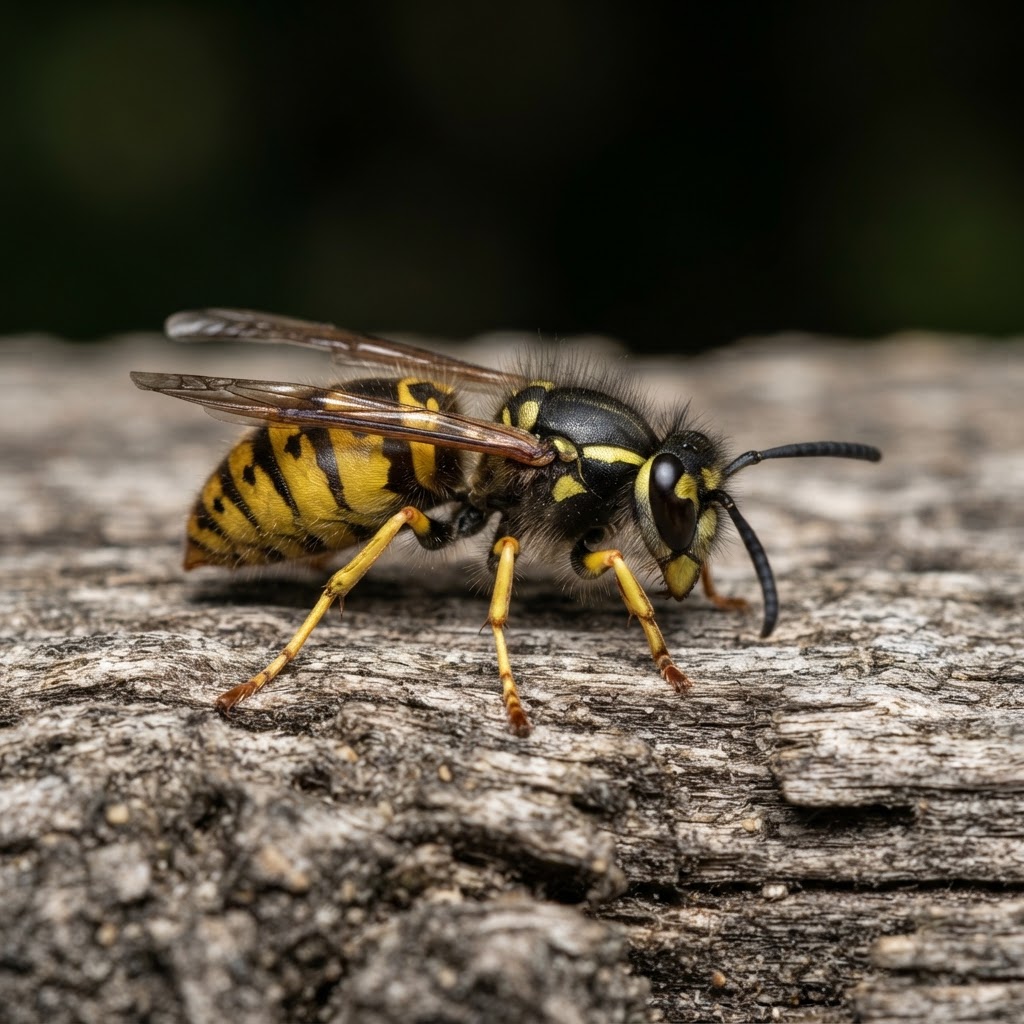
The insect behind most "bee stings" in Wisconsin. Yellow jackets are aggressive, can sting repeatedly, and build large hidden nests in the ground, in wall voids, and under eaves — the most common stinging-insect call we get in late summer.
What They Do for Wisconsin
Yellow jackets are predators and scavengers. Workers hunt caterpillars, flies, and other insects to feed their larvae, and they clean up carrion and rotting fruit — a real service in gardens, fields, and forests. The problem is that by late summer their colonies peak at thousands of workers, and they switch to scavenging human food at picnics, trash cans, and patios. They are far more aggressive than bees and will sting repeatedly to defend a nest or a food source.
What They Do in the Winter
Yellow jacket colonies are annual. When hard frost hits Wisconsin in fall, the entire colony dies — workers, males, and the old queen all perish. Only newly-mated fertilized queens survive the winter, tucking themselves into protected spots to wait for spring. The old nest is never reused.
- Only fertilized queens overwinter — under tree bark, in logs, in wall voids, or in attics.
- The rest of the colony (1,000–5,000 workers) dies at first hard frost.
- In spring, each surviving queen starts a brand-new nest from scratch in a new location.
- Old ground and wall nests are abandoned and are not reused the following year.
Nesting
Yellow jackets build papery comb nests enclosed in a gray paper envelope. Most Wisconsin yellow jackets nest underground in abandoned rodent burrows or rotting stumps, but some build aerial nests in shrubs or under eaves — and German yellow jackets often nest inside wall voids and attics, which is especially dangerous.
Diet
Yellow jackets are carnivores-turned-scavengers. Larvae are fed chewed-up insects; adults drink nectar for energy but are famous for swarming soda, meat, and garbage at outdoor gatherings.
- Caterpillars, flies, and other insects (fed to larvae)
- Nectar and tree sap (adult energy)
- Rotting fruit and carrion (scavenging)
- Human food — soda, meat, sweets, garbage
Fast Facts
Unlike honeybees, yellow jackets have smooth stingers and can sting many times without dying.
When one stings, it releases an alarm chemical that signals the whole nest to swarm and attack.
Most "bee stings" in Wisconsin are actually yellow jackets — they're far more common and aggressive than bees.
You may not see the nest at all — many yellow jackets enter and exit through a small hole in the lawn.
Yellow jackets can also bite to get a grip before stinging, especially when defending a food source.
Colonies are largest and most aggressive in August–September, right when people are outdoors.
When to Call Mid State
Yellow Jackets nests near your home, deck, or play areas are a real safety risk — they can sting repeatedly and swarm when disturbed. Don't treat a large nest yourself. Our team removes them safely and treats the area to prevent rebuilding.