Bumble Bees
in Wisconsin
Big, fuzzy, gentle native bees that buzz-pollinate tomatoes, peppers, and cranberries — a pollination honeybees cannot do. They are beneficial and should be protected, not exterminated. Only the queen survives winter, and a colony is gone by fall.
What They Do for Wisconsin
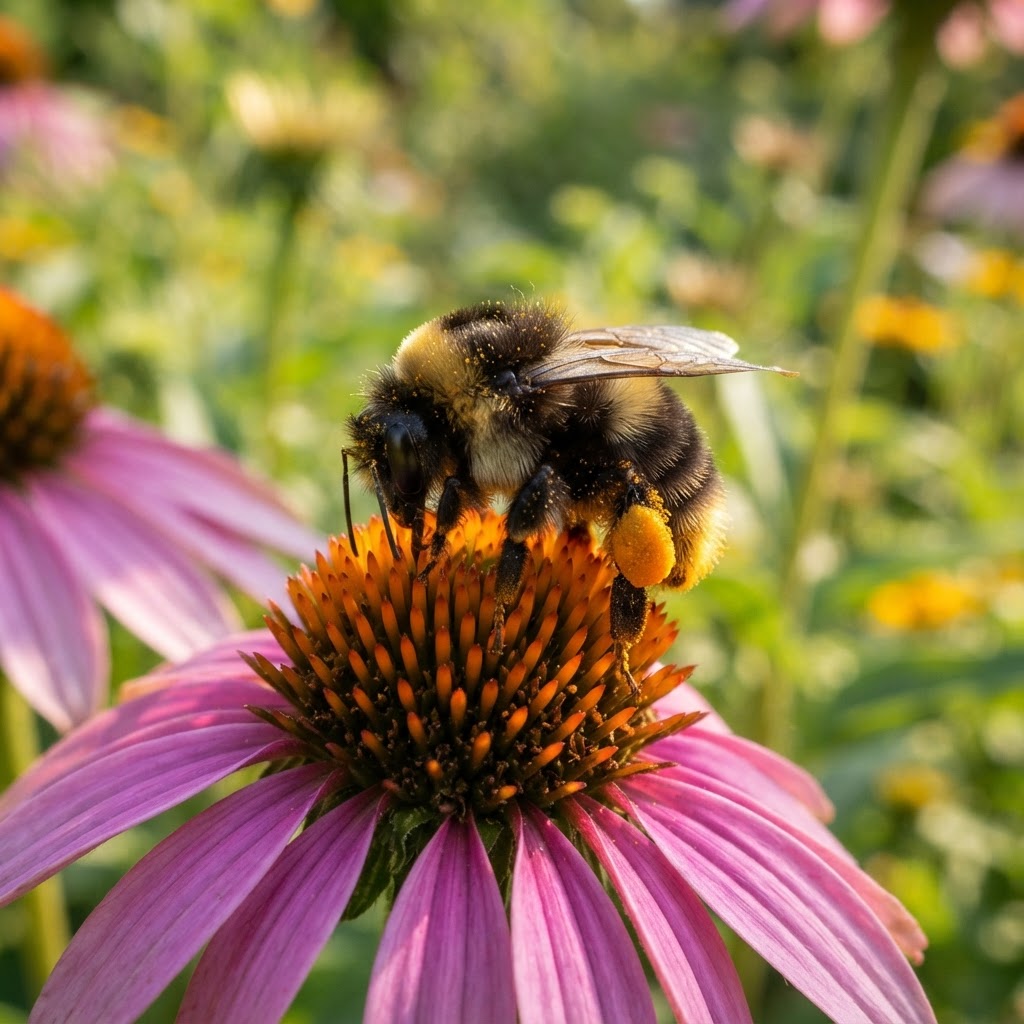
Bumble bees are among Wisconsin's most important native pollinators. They fly in cooler weather than honeybees and "buzz-pollinate" by vibrating pollen loose from flowers — the only way to pollinate tomatoes, peppers, eggplant, and cranberries. They are gentle, fuzzy, and focused on flowers; they sting only if the colony is threatened or they are stepped on or grabbed. Like honeybees, a bumble bee colony is a resource worth protecting — if one nests in a high-traffic spot, the right move is to let it run its season or relocate it, not exterminate.
What They Do in the Winter
Bumble bees are annual, like wasps — not like honeybees. The whole colony dies in fall, and only newly-mated queens survive the winter, hibernating alone underground or in sheltered spots. Each spring a lone queen emerges, finds a nest site, and starts a brand-new colony from scratch.
- Only mated queens overwinter — alone, underground or in sheltered crevices.
- The rest of the colony (workers, males, old queen) dies in fall.
- Each spring a single queen starts a brand-new colony by herself.
- Unlike honeybees, no honey store or colony survives the winter.
Nesting
Bumble bee queens nest in the ground — abandoned rodent burrows, grass tussocks, compost piles, or under sheds — and occasionally in wall voids or bird boxes. Colonies are small, usually 50–500 bees, and the nest is a messy cluster of wax pots and pollen balls rather than neat comb.
Diet
Bumble bees feed on nectar and pollen from a wide range of flowers. They store a little nectar in small wax "honey pots" inside the nest, but they do not make large honey stores like honeybees.
- Nectar from many flowers (carbohydrates)
- Pollen from many flowers (protein for larvae)
- Small wax "honey pots" inside the nest
- No large honey store like honeybees
Fast Facts
Bumble bees vibrate their bodies to shake pollen loose — the only way to pollinate tomatoes, peppers, and cranberries.
They fly in cooler temperatures than honeybees, so they pollinate early crops and wildflowers when honeybees stay home.
Bumble bees are calm and focused on flowers; they sting only if the colony is threatened or they are stepped on.
Unlike honeybees, the bumble bee colony dies in fall and only a mated queen lives through the winter.
They nest in old rodant burrows and grass tussocks — you may see them coming and going at ground level in spring.
A bumble bee colony is beneficial and temporary; let it finish the season or have it relocated rather than exterminated.
Protect, Don't Exterminate
Honeybees are essential pollinators — we do not treat them as pests. If a colony has moved into your wall, chimney, or a high-traffic area, the right move is live relocation by a beekeeper, not extermination. We can help you find a local beekeeper and handle any follow-up exclusion so they don't return.
Learn About Bees & Pollinators